Written By Edwin B. Romero | May 26, 2026


Written By Edwin B. Romero | May 26, 2026
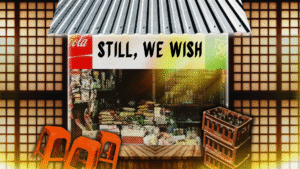
College was supposed to be about learning, growth, and chasing opportunities. But today, for many students, it has quietly turned into a daily exercise in survival. As prices surge across the board, student life has been fundamentally reshaped. We are no longer just meeting deadlines; we are calculating fares, skipping meals, and carrying the daily burden of not having enough. This is not an isolated struggle, but a systemic failure that continues to be overlooked.
Let’s be clear: inflation is not just an economic term we hear in the news. It is something we feel every single day.
In the Philippines, where students rely heavily on public transportation, every fuel price hike immediately translates into higher daily costs. A jeepney fare that used to be manageable now eats up a significant portion of a student’s allowance. What would normally be a casual lunch out now seems like a luxurious treat. Everything, even things as simple as the expenses for attending school such as paying for printouts and other school necessities, is getting quite costly. It is especially because of the oil crisis that things have been getting even costlier. An increase in the price of fuel causes an immediate increase in everything else.
As a student, eating an adequate meal alone will now set you back 150 pesos, and being a student-athlete means you need adequate nutrition for your studies and physical activities. The transportation aid is not even sufficient. There are no structural changes that could help people who are in need. Transportation costs continue to rise because of the oil crisis, while even basic food and necessities around campus have become unreasonably expensive.
There are times when my allowance no longer feels enough despite trying to budget carefully, and that reality becomes frustrating when all I am trying to do is study properly and get through the week.
All of a sudden, going to classes is not merely an issue of presence; it has become an issue of weighing if it is possible to make ends meet.
And thus, students are forced to adapt not only to new modes of budgeting, but also to other coping mechanisms. Some have resorted to working part-time jobs online and freelancing, not because they want to build their careers, but because they need to earn some money. Others are more disciplined with their budgeting practices, counting every peso, reducing their daily expenditure, and making decisions on what they really need versus what they don’t need. The situation becomes more worrisome since now, instead of just foregoing their wants, students find themselves compromising their needs.
Perhaps, however, the most disturbing reality that inflation reveals is that of inequality.
Not all students are affected by this crisis in the same manner. Some find this as merely a bit of an inconvenience, while others find themselves constrained and overwhelmed. The growing disparity between these two groups makes inequality evident even within the supposedly equalizing environment of education, and this is when the role of the government comes into focus.
When it comes to making choices between essentials and education all the time, the system is failing itself. The financial aid, the scholarships, and the grants have not been able to cope with inflation.
The truth is that students are not dependent on receiving education. We are the future workforce, professionals, and leaders of the country. Investing in us is not an option. But from what is going on now, it does not seem like that. If the mere fact of being a student already poses a financial burden, then it means something else: education is available for those who can afford it.
If students are truly the future, then why are we being forced to survive the present on our own?
Inflation problems exacerbated by the oil crisis do not pose only transient problems to students but determine the winners and losers among them.
At the same time, students are not blind to who else is bearing the weight of this crisis. We see it in jeepney drivers who face rising fuel costs yet struggle to earn enough to take home. We see it in middle-class families who continue to pay taxes faithfully but feel little to no relief in return. There is empathy—but empathy does not cancel out accountability. Understanding shared hardship should not mean accepting inadequate responses.
The government cannot continue to treat this as a minor side effect of a larger economic issue.
When education becomes harder to access because of rising daily costs, it stops being a right and starts becoming a privilege. That shift is not just alarming—it is a warning sign of a system that is leaving more and more students behind.
Students are already doing everything they can to cope. The question now is: will the government do the same?
Because if the future is built on the backs of students, then neglecting them today is not just short-sighted—it is a deliberate failure.
Volume 31 | Issue 11