The government's proposal to have more control over social media to fight against misinformation is not only about having false information removed. It is about deciding who has power over truth. The bill seeks to counter the harmful disinformation online to spread, however it also grants the government control over digital speech, raising concerns in regards of censorship, accountability and the freedom of expression in the Philippines.
Last July 24, 2026, the House of Representatives approved House Bill No. 9465, or the Digital Media Anti-False Information Act, on its third and final reading. Journalists, civil society groups, digital rights advocates, and other sectors have since called on Congress to halt or revise the measure.
Their opposition is not a defense of misinformation, but rather a warning against the possible consequences the bill may have on press freedom, journalism, and freedom of expression.
The bill passed with 287 votes in favor and three against, raising concerns about whether the government is placing greater importance on protecting its image than safeguarding the public's right to free speech.
If the government is given the authority to determine which information is considered false, how can the public be certain that such power will not be abused? What remains of journalism if every report and opinion must first withstand government scrutiny?
If enacted, the bill would allow the government to decide what constitutes factual information.
It can be applied unevenly to different media outlets and sources of news. It is not necessarily designed for censorship, but despite that, even if the current government plays it right, it could go wrong in the long run. The Free Press would be no more, as media outlets will begin to weigh the consequences of whatever they release, as those who do not abide will face 6-12 years of imprisonment with fines ranging from 500 thousand to 2 million pesos.
The bill, while having a good premise in hindsight, may prove to do more harm than good. “Fact-checking groups” is a vague statement that does not qualify any organization. This is ironic, given that some politicians themselves have had accusations of benefiting from misinformation. With the elections coming close, the situation is even more concerning.
Opposing House Bill No. 9465 does not mean supporting the spread of false information. Misinformation remains a serious issue that requires decisive action.
However, any measure intended to address it must establish clear standards, ensure transparency, and include safeguards that protect press freedom and the public's right to criticize the government.
This can be a way to avoid forms of disinformation spreading online however it can still go wrong. And the people calling it out are not against disinformation. They are against how the information will be controlled when the bill is implied.
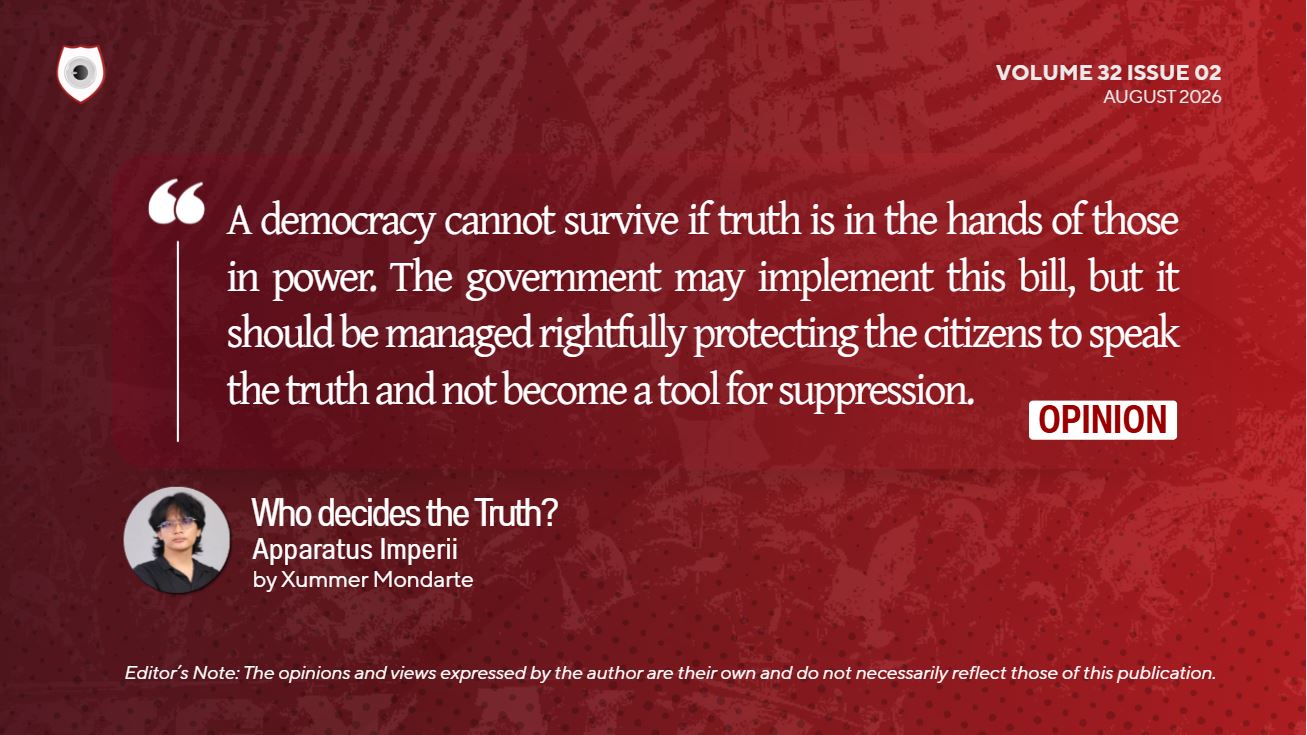
A democracy cannot survive if truth is in the hands of those in power. The government may implement this bill, but it should be managed rightfully protecting the citizens to speak the truth and not become a tool for suppression.