Written by The Bedan Herald | June 1, 2026

Written by The Bedan Herald | June 1, 2026
“THE State shall promote a just and dynamic social order…” is a promise written in the 1987 Philippine Constitution. But for many Filipinos today, that promise feels distant every time the monthly electricity bill arrives.
An article from the Inquirer published last April 2026 reports electric bills have been increasing at such a fast pace that it becomes hard to ignore. Manila Electric Co. (Meralco) reported higher electric rates for the month of April and said that an increase of 53 centavos per kWh from March, estimating P107 in total bill. Meralco explained that the increase in electricity rates was caused by rising global fuel prices and depreciation of the Philippine peso, which made fuel imports more expensive.
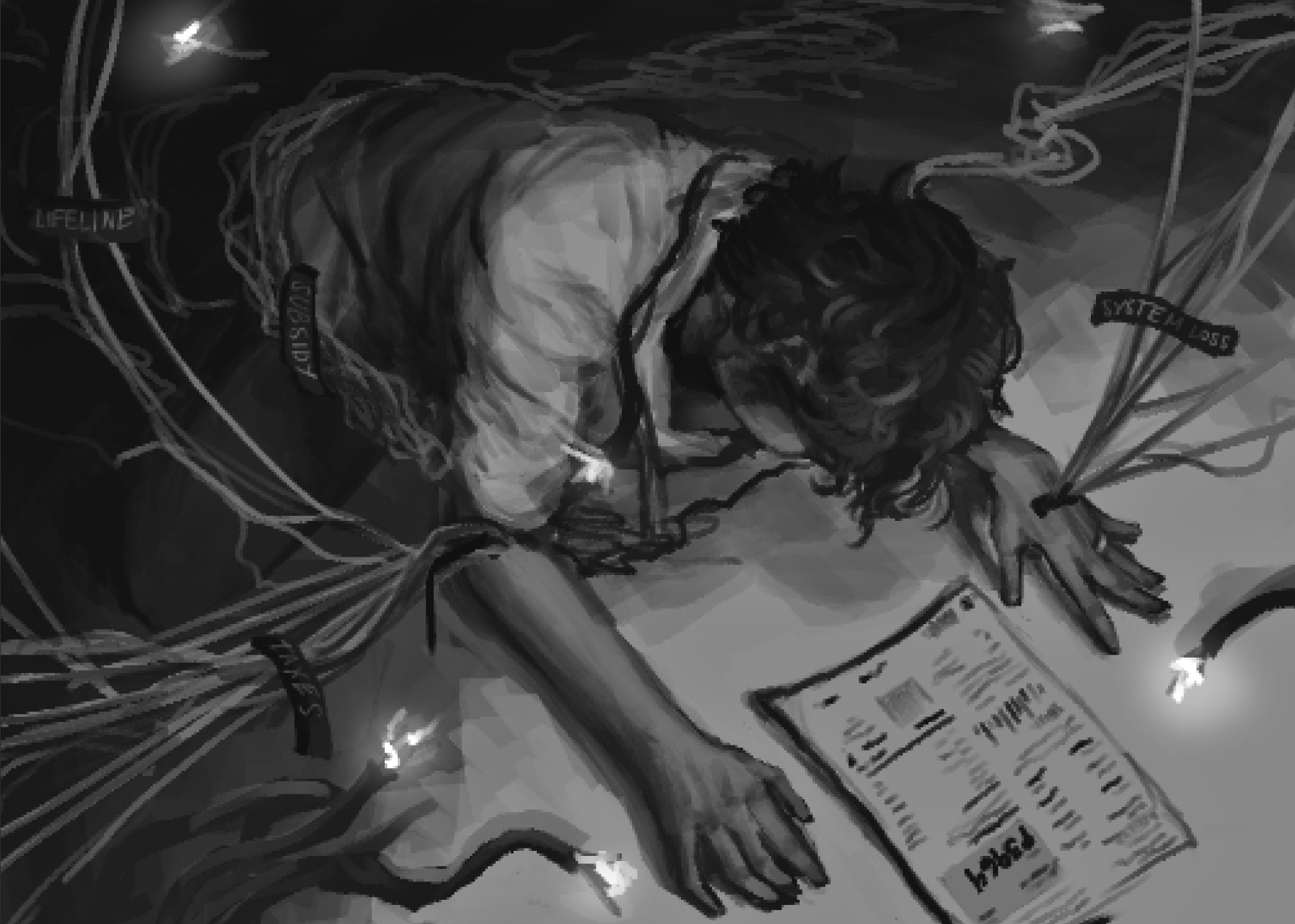
Aside from paying for their own electricity use, consumers also pay additional charges in their electric bills. These include the lifeline rate, which helps provide discounts to low-income households and is partly funded by other consumers.
Another expense included in the electric bill is the funding for renewable energy shift, where a charge is required to adopt Feed-in Tariff (FIT) program under the Renewable Energy (RE) Act of 2008.
For transparency, Meralco provides a breakdown of electricity charges on its website. According to the company, 64% of the bill goes to generation charges, 12% to distribution charges, 11% to other charges, 8% to transmission charges, and 5% to system loss charges.
Yet beyond these explanations and breakdowns, the reality for many Filipinos is much more personal. At the end of the day, the question most households ask every month is simple: kaya paba ng budget?
As electricity prices continue to rise, families are forced to make constant adjustments in their daily lives. Lights are turned off earlier, appliances are unplugged and every member of the household is reminded to conserve electricity when possible. Yet despite these efforts and sacrifices, electricity bills continue to rise.
Because of this, many consumers have started directing their frustration toward subsidies found in their bills. But the problem goes beyond subsidies alone. In reality, subsidies such as the lifeline rate only make up a small portion of the many charges passed on to consumers. What burdens households more heavily are the combined costs of generation charges, taxes, transmission fees, market fluctuations and other expenses continuously added to monthly bills. The issue is not simply one charge, but overall accumulation of costs that ordinary consumers are expected to absorb.
This burden becomes clearer in the experiences shared by consumers themselves. In a news article by ABS-CBN, several consumers shared how increasing electricity rates continue to affect their daily lives and household budgets. One of those consumers is 50-year-old Babes Fernandez, who struggles to make ends meet, as her electricity bill now reaches P2,300, even though it was only P900 before. Similarly, Ria Marie Villa, who has been carefully saving electricity, now pays P2,000 for her consumption in March.
According to Ria, government-imposed charges alone already take a significant portion of P205.50 in Value Added Tax and P218.86 in other taxes. She also paid P1.56 for lifeline subsidy contributions, and P114.82 in system loss charges.
And then came the April 2026 increase—P106 more for a typical household using 200 kWh. For some, that’s just a small amount, but for others, that’s already part of their grocery and transportation budget, as well as school expenses.
And this is where it hits harder. Consumers are no longer paying for the electricity they personally consume. They are also expected to absorb system losses, taxes, market, fluctuations and multiple subsidy-related charges. Again, helping others is not the issue, it is not the problem. Most Filipinos understand the importance of social programs and public welfare. But public service should not operate in a way where almost every financial burden is quietly transferred to consumers who are also making ends meet.
To be fair, the government and energy sector do require funding for electricity to be produced, delivered and maintained. However, the issue today is no longer whether consumers should contribute. The issue is whether too much burden is already placed on the same people expected to simply endure rising costs every month.
Even Akbayan Rep. Chel Diokno emphasized that the burden of rising electricity should not fall solely on ordinary Filipinos. In his statement, companies such as Meralco that operate under a monopoly have limited competition and therefore should have more burden and carry the responsibility to protect consumers.
A just system should feel balanced. Public Welfare Programs, energy transitions, and operational costs are necessary, but their financial weight should be shared more fairly among the government, corporations, and consumers alike, and not transferred almost entirely to the public.
As Filipinos and taxpayers, people also have a role to play beyond simply paying their monthly bills. Citizens must continue demanding transparency from both government agencies and power companies. Consumers deserve clearer explanations regarding where charges go, how rates are computed and why additional fees continue increasing. Supporting renewable energy should also come with stronger government accountability and better long-term planning so that the transitioning of it does not unfairly burden ordinary people.
At the same time, lawmakers and regulators should scrutinize taxes, system loss charges and subsidy mechanisms to ensure that they remain fair and reasonable. Large corporations benefiting from the energy sector should also share greater responsibility instead of passing most additional costs to consumers.
Because if this system is truly meant for the people, by the people, and of the people then it should not feel as though the people alone are carrying its heaviest burden.
Volume 31 | Issue 12