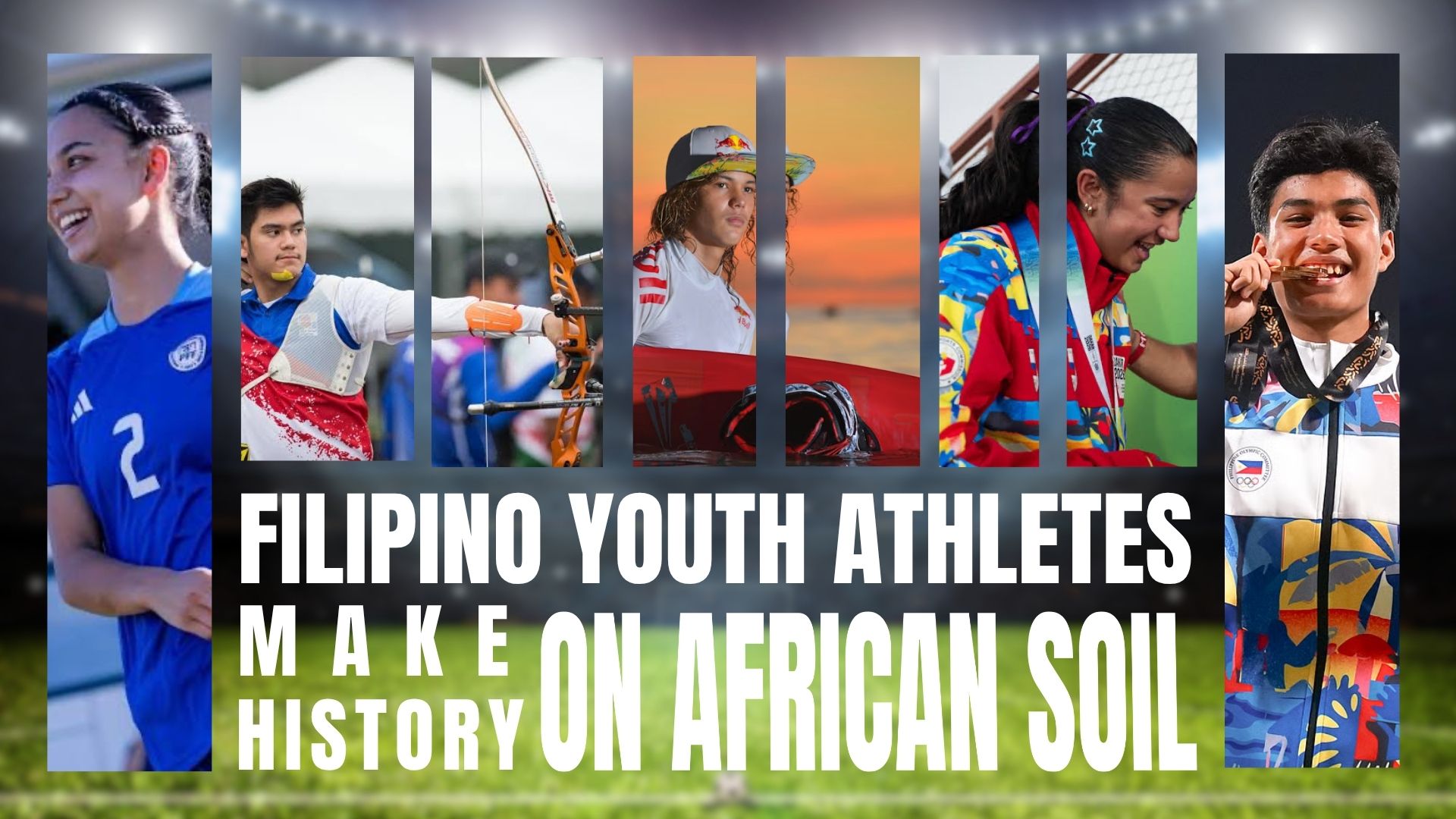
THE Philippines recorded its strongest Youth Olympic Games (YOG) campaign as Naomi Marjorie Cesar and Pi Durden Forward Wangkay won silver and bronze medals, respectively, in athletics at Dakar 2026, which concluded on Nov. 13. Cesar finished the women’s 800-meter race in 2 minutes and 9.34 seconds, while Wangkay clocked 21.36 seconds in the men’s 200-meter event.
The nine-member Philippine delegation competed in six sports alongside nearly 2,700 athletes representing 204 National Olympic Committees (NOCs) during the 14-day competition. Dakar 2026 also marked the first Olympic-branded sporting event held in Africa.
A Historic First for Africa
The fourth edition of the competition featured 25 sports and 153 medal events across three host zones: Dakar, Diamniadio, and Saly. Events included athletics, swimming, beach wrestling, rugby sevens, baseball, and wushu.
Dakar 2026 marked a milestone for African sports as the continent hosted its first Olympic-branded sporting event. The Games also provided a platform for cultural exchange and youth participation. African athletes recorded historic achievements, including The Gambia's Mustapha Jadama, who won silver in the men's 400-meter event for the country's first Olympic medal, and Zimbabwe's Ropafadzo Liberty Mzondo, who claimed gold in the men's 200-meter event to become the country's first YOG gold medalist.
Filipino Pride on the Podium
Both medalists came from families with backgrounds in Philippine sports. At 17, Naomi follows her father, Ben Cesar, a former national team sprinter and national champion in the 100-meter and 200-meter events who represented the Philippines in international competitions, including the 1991 Southeast Asian Games in Manila. Her older sister, Malea Cesar, has represented the country in women’s football since 2022 and was part of the national squad for the 2023 Fédération Internationale de Football Association (FIFA) Women’s World Cup and the 2026 AFC Women’s Asian Cup.
Meanwhile, 17-year-old Wangkay is from Biñan, Laguna, and is coached by his mother, Jonah Genilza, a former national track-and-field athlete who won the 400-meter event at the Palarong Pambansa in the 1990s.
Beyond the Medals
In an interview with the Philippine Olympic Committee (POC) Media Pool, Genilza recalled her son's childhood promise to surpass her achievements. “He once told me when he was younger that he’d be better than me,” she said. “And he’s doing that already. He’s here in the Youth Olympics and he won a bronze medal.”
Meanwhile, Ben Cesar expressed pride in his daughter's achievement and its impact on young Filipinos. “Obviously, I’m very happy, but happier knowing Naomi is doing this not only for herself but for the kids back home. She dreamed of doing this,” he said. He also encouraged aspiring athletes to pursue their goals. “Don’t be afraid to dream. Through hard work, anything is possible,” he added.
The Philippines' first officially credited Youth Olympic Games medal came at Buenos Aires 2018, when kiteboarder Christian Tio won silver in the boys' twin-tip racing event. Before this, archer Luis Gabriel Moreno partnered with China's Li Jiaman to win gold in the Mixed-National Olympic Committees (Mixed-NOCs) event at Nanjing 2014. However, the medal was credited to the mixed team and was not included in the Philippines' official medal tally.
What Lies Ahead
Despite the successful conclusion of Dakar 2026, the future of YOG remains uncertain. The International Olympic Committee has paused the selection process for the 2030 edition while evaluating the event’s format and long-term direction, with IOC President Kristy Coventry acknowledging that the organization must reassess how the competition can best engage the younger generations. “We’ve realised that we simply need to re-examine how we engage with young people globally, and what that looks like,” Coventry explained.
Dakar 2026 marked a milestone for African sports and Filipino youth athletics. Cesar and Wangkay's medal finishes highlighted the ability of young Filipino athletes to compete internationally and represent the country on the global stage.