By John Marion De Guzman | November 22, 2026


THE Philippines ended its 2026 chairship of the Association of Southeast Asian Nations (ASEAN) after hosting its 49th Summit from Nov. 15 to 17, with member states reaching agreements on regional cooperation and security but failing to finalize the long-delayed South China Sea Code of Conduct. The summit also addressed regional conflicts, humanitarian concerns such as the possible return of Myanmar to the bloc, and rising energy costs.
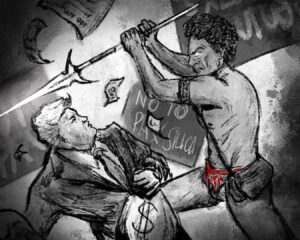
Despite the summit's diplomatic agreements and developments, the government faced criticism over clearing operations that displaced poor communities and the installation of white-painted plywood boards along roadsides, which critics said masked poverty affected areas out of sight ahead of the event.
Peace talks and agreements
On its first day, ASEAN state leaders came to an agreement to gradually restore Myanmar's participation in their meeting, with the condition that it complies with the ‘Five-point consensus’—a mediation and peace framework agreed upon in 2021 concerning the humanitarian and political crisis in Myanmar pursuant to its military coup.
Theresa Lazaro, Foreign Affairs Secretary, said that the state leaders settled on pursuing a “calibrated engagement step by step and progress-based approach” in order to revitalize the political representation of Myanmar.
"We want to see how Myanmar responds to that because right now there's still certain bombings and displacement of Myanmar people," Lazaro said, as the country’s military-backed President, Min Aung Hlaing, was prohibited from participating in this year’s summit.
UN Secretary-General António Guterres raised concerns over regional conflicts, rising energy costs, and humanitarian crises.
Concerning the South China Sea, the Philippines failed to finalize the proposed Code of Conduct (COC) during its ASEAN chairmanship due to unresolved disagreements between China and ASEAN member states, leaving Singapore to continue the negotiations when it assumes the chairmanship in 2027.
Matters concerning the transboundary haze pollution from the forest fires in Indonesia were also discussed during the summit. ASEAN state leaders also took up the Digital Economy Framework Agreement, urging progress on regional energy cooperation, and called for the full implementation of the petroleum security agreement. They further confirmed Timor-Leste as ASEAN's 2029 chair and introduced a redesigned flag and emblem with an additional rice stalk symbolizing its membership.
On its second day, Chinese Premier Li Qiang promoted free trade and multilateralism, citing over $1 trillion in bilateral trade and more than $500 billion in cumulative investments between China and ASEAN. Marcos called for continued cooperation despite regional tensions and uncertainties.
"Although economic and trade restrictions have substantially increased around the world, we remain firmly committed to safeguarding multilateralism and promoting free trade and endeavor to make the pie of cooperation bigger," he said.
Marcos urged China and ASEAN to uphold international law, exercise restraint, and settle disputes peacefully amid tensions in the South China Sea. The summit also adopted four documents covering areas including energy and forestry cooperation. "Continue to find common ground and pursue tangible cooperation," the president added.
U.S. President Donald Trump arrived in Manila to meet ASEAN leaders and attend the first Quad summit in two years with Japan, Australia, and India before heading to Shenzhen for the APEC forum and meeting with Chinese President Xi Jinping and Russian President Vladimir Putin.
“The Quad has always contributed to peace and stability of this region. The Quad will shape the future of the Indo-Pacific together with our regional partners,” Japanese Prime Minister Sanae Takaichi said.
On the other hand, Indian Prime Minister Narendra Modi provided that India will continue to explore “trusted solutions for the entire Indo-Pacific” from maritime security to trusted supply chains and disaster response.
Lazaro further said online scams and transnational crime were raised in all four meetings with ASEAN's dialogue partners, with leaders discussing cooperation against cybercrime and AI misuse. Australian Prime Minister Anthony Albanese announced a program promoting AI safety and digital trade, while South Korean President Lee Jae-myung proposed cooperation in AI and creative industries and cited progress in expanding the country's free trade agreement with ASEAN.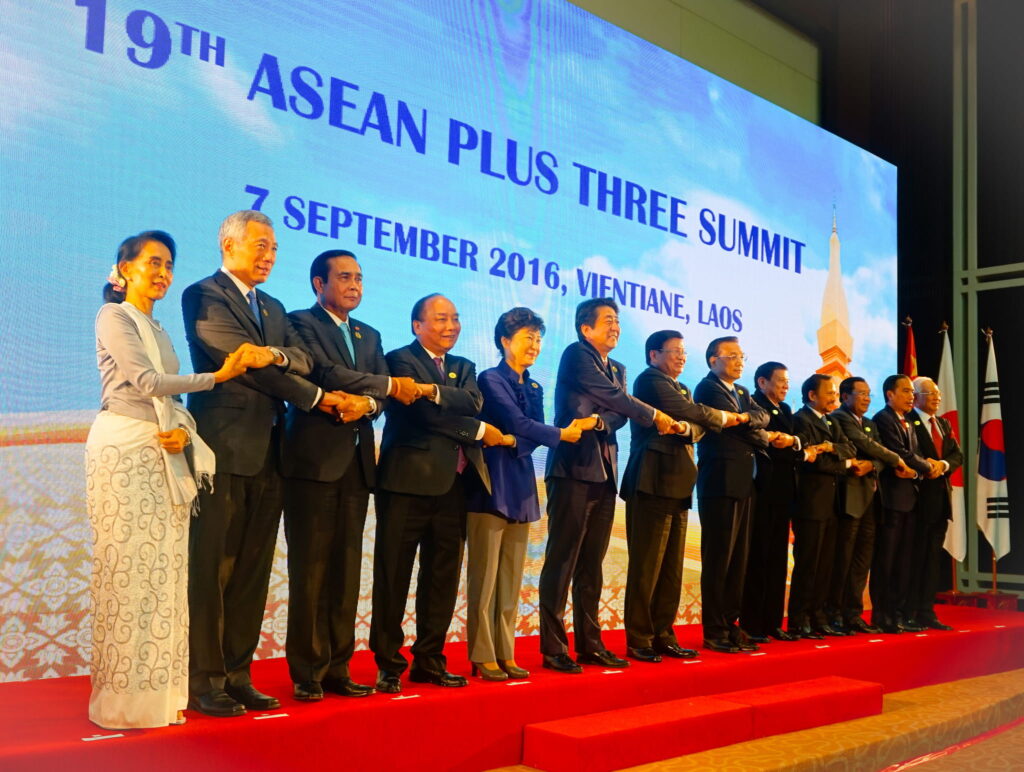
On its third day, the Philippines formally handed over the ASEAN chairmanship to Singapore, concluding the 49th ASEAN Summit with more than 100 adopted or noted outcome documents. However, the bloc failed to finalize the long-delayed South China Sea Code of Conduct despite continued negotiations.
State leaders from ASEAN, China, Japan, and South Korea adopted statements on maritime trade, logistics, energy, and food security, while Marcos highlighted joint proposals with Japan to stockpile energy resources. Furthermore, they also agreed to continue excluding Myanmar's military-backed leaders from high-level meetings but may restore the country's full political representation if its government makes sustained progress in implementing the bloc's Five-Point Consensus peace plan.
The state leaders further pushed forward plans for a regional power grid and established a framework to strengthen disaster-response cooperation among member states. Moreover, there are plans to build the first undersea power cable connecting Sabah, Malaysia, and Mindanao.
Meanwhile, Slovenia, Slovakia, and Cyprus joined the Treaty of Amity and Cooperation.
Other end of the summit
However, prior to the summit, the preparations for its 49th installment came under fire as the general public and critics of the Marcos administration labeled the clearance operation of the government as "whitewashing" the poverty stricken areas along Parañaque.
House of Representatives Deputy minority floor leader Antonio Tino from the ACT Teachers Partylist said that ever since the government began its cleaning operations, poor communities within the country have been displaced.
“Five decades after Imelda Marcos whitewashed Manila’s slums for the Miss Universe pageant, the IMF–World Bank meeting and the papal visit, her son is staging the exact same production,” he said.
Paranaque City Mayor Edwin Olivarez displaced street vendors alongside Paranaque City to alleviate traffic congestion and clear the road from obstruction. However, he provided that the street vendors shall be allowed to return to their original spots following the close of the summit.
“Poverty is not an eyesore to be fenced off from view. It is the direct result of decades of anti-people policies. Hoisting tarpaulins and displaying artwork will not feed a single displaced vendor’s family,” Tinio said.