By John Marione De Guzman |August 20, 2026

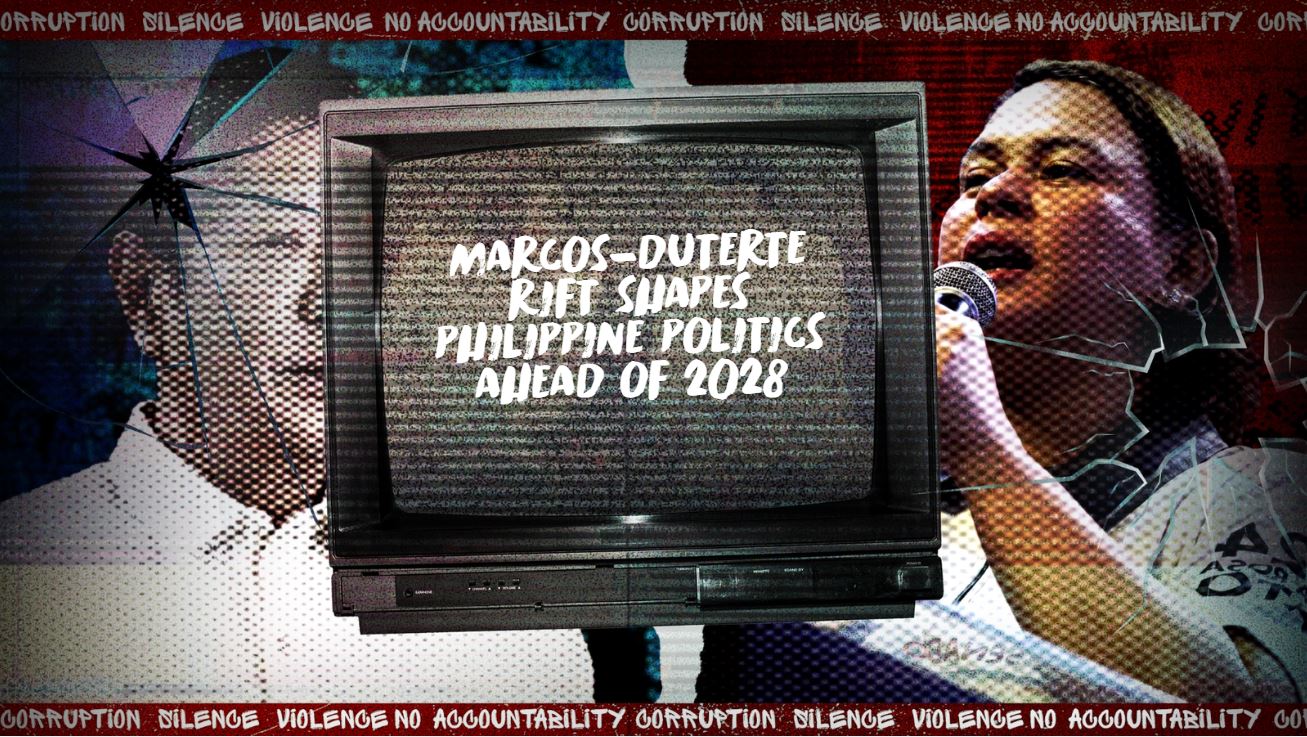
Marcos-Duterte rift shapes Philippines politics ahead of 2028
By John Marione De Guzman |August 20, 2026
THE widening divide between President Ferdinand “Bongbong” Marcos Jr. and Vice President Sara Duterte, the ongoing impeachment proceedings against the Vice President, and the early jockeying of political camps for the 2028 presidential elections are reshaping the country’s political discourse and placing the government and opposing political forces under heightened scrutiny.
Political Partnership Under Strain
A political alliance was formed between two of the Philippines’ most prominent political dynasties when President Ferdinand “Bongbong” Marcos Jr. and Vice President Sara Duterte ran together in the 2022 presidential elections, ultimately securing the country’s two highest elected offices.
The tandem campaigned on a platform of “unity” during the 2022 elections, with Duterte publicly supporting Marcos during the campaign.
Their tandem ultimately secured victory in the 2022 elections, placing Marcos in the presidency and Duterte in the vice presidency with 58.77 percent and 61.53 percent. Following them was the Leni-Kiko tandem, with Leni Robredo garnering 27.94 percent and Kiko Pangilinan with 17.82 percent. Meanwhile Manny Pacquiao and Vincent “Tito” Sotto placed third with 6.81 percent and 15.76 percent.
The alliance later fractured, with Marcos and Duterte now leading opposing political camps. Duterte is currently facing an impeachment trial before the Senate over allegations including misuse of confidential funds, bribery, unexplained wealth and grave threats against Marcos. The charges are being contested in the ongoing proceedings.
Palace Press Officer Undersecretary Claire Castro said Duterte could face additional charges over her November 2024 remarks about a supposed plot to kill Marcos, his wife Liza Araneta-Marcos and House Speaker Martin Romualdez.
“Huwag kang mag-alala, Ma'am sa security ko, kasi may kinausap na ako na tao. Sabi ko sa kanya, kapag pinatay ako, patayin mo si BBM, si Liza Araneta, at si Martin Romualdez,” the Vice President said.
"So, it is not just a simple grave threat. Personally, my opinion… For me, but I cannot go against the DOJ, there is this element of inciting to sedition," she Castro, stating that it could be viewed as an attempt to sow hatred against the President and the government.
During the trial, disputes between the prosecution and defense have prompted Senate impeachment court Presiding Officer Francis “Chiz” Escudero to call for restraint and proper decorum.
The outcome of the trial could have significant political consequences for Duterte. A conviction could preclude her from holding public office, while an acquittal would allow her to continue pursuing her political ambitions ahead of the 2028 elections.
2028 Presidential Elections
Beyond the impeachment trial, the political rift has extended to the 2028 presidential race, with Duterte announcing her intention to run for president in February. She also said she had already “recruited” a running mate but did not disclose the person’s identity.
Meanwhile, Marcos said Aug. 14 that he would endorse a candidate in the 2028 presidential elections but had yet to decide whom to support. He said his chosen candidate would be someone he was confident would continue his administration’s anti-corruption efforts.
Foreign Policy
The political divide also comes amid differences in the foreign-policy approaches of the Marcos and Duterte camps, particularly toward China and the United States. Under Marcos, the Philippines has strengthened defense and security cooperation with the United States while maintaining diplomatic and economic ties with China.
This differs from former President Rodrigo Duterte’s approach, which sought closer ties with China and a reduction in tensions with Beijing while maintaining a more distant relationship with the United States.
The West Philippine Sea remains a key issue in the Philippines-China relationship. Despite continuing maritime disputes, Marcos said on Aug. 14 that joint oil and gas exploration with China remained a “distinct possibility,” citing progress in discussions and the Philippines’ need to bolster its energy security.
"I don't think that's in any policy, in any policy statement, that we are distancing ourselves from China. We are continuing to find many, many instances where we are very much in cooperation with China. China is one of the biggest investors still in the Philippines," the President stated.
The tensions were highlighted on Aug. 15, when Defense Secretary Gilberto Teodoro Jr. criticized Beijing after a Chinese Foreign Ministry spokesperson warned that Filipinos could “bear the brunt” of worsening relations between Manila and Beijing.
Teodoro's remarks came amid a dispute over the arrest of more than 100 Filipinos in Beijing for alleged immigration violations. He had earlier criticized the arrests and accused China of using immigration enforcement to pressure the Philippine government—with Beijing denying that the arrests were intended to pressure Manila.
“Threatening that they will ‘bear the brunt’ is an indiscriminate threat to retaliate against all Filipinos, which is, plain and simple, extortion and blackmail beyond doubt,” he said.
The developments underscore the challenges facing the Marcos administration as it navigates relations with both China and the United States while asserting Philippine rights over the West Philippine Sea.
With the 2028 elections approaching, Duterte’s impeachment trial and the positioning of political camps are likely to remain central issues in Philippine politics. Marcos has yet to name his preferred successor, while Duterte has declared her presidential bid, setting the stage for continued competition between their respective camps.