By Haniel Mizukami | September 9, 2026

By Haniel Mizukami | September 9, 2026
THEY say home is where the heart is. It can be a person, a place, or even a feeling—a space where we feel cared for, where we belong, and where we find comfort. But what happens when that home has four corners, iron bars, and no way out? For Mali, once given the heartbreaking title “The World’s Saddest Elephant,” the cage she once called home was also the boundary between her and the freedom she would never get to know.
The World’s Saddest Elephant
Born in Sri Lanka around 1974, Vishwa Ma'ali, famously known as Mali, was a female Asian elephant (Elephas maximus) who was reportedly orphaned after her mother died of natural causes. She was later brought to the Pinnawala Elephant Orphanage before being gifted to then First Lady Imelda Marcos by the Sri Lankan government in 1977 as a diplomatic gesture of friendship between the two nations.
At only a few years old, Mali arrived in the Philippines and was eventually brought to the Manila Zoo, where she would spend the rest of her life.
For many children, Mali was simply called the elephant at the zoo.
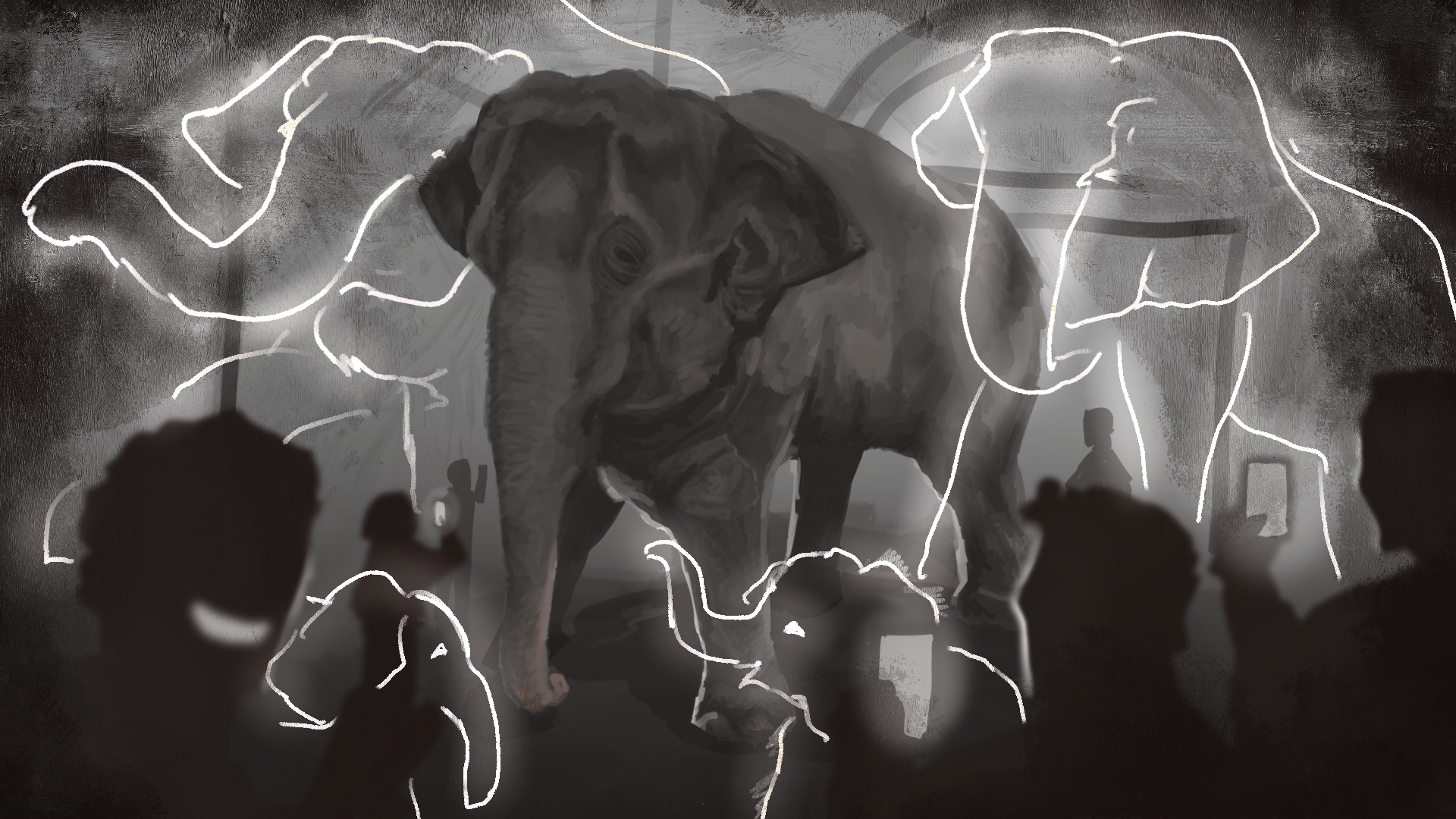
She was the enormous animal that children pointed at with wide eyes, the subject of countless photographs during field trips—the elephant with weathered wrinkles and quiet, dark eyes that seemed to carry a sense of weariness whenever visitors came to see her.
But while visitors came and went, Mali remained, confined within the four corners of what was supposed to be her sanctuary.
A Life Behind Bars
Mali once shared her space with another elephant named Shiva. After Shiva’s death in the 1990s, however, Mali was left alone for decades. Animal-welfare advocates began raising concerns about her condition and the environment in which she lived.
Among those who campaigned for her transfer was People for the Ethical Treatment of Animals (PETA), which called for Mali to be moved to an elephant sanctuary in Thailand. PETA argued that Mali was being denied socialization, stimulation, space to explore, and other conditions considered essential to her well-being. Then-Mayor Joseph “Erap” Estrada, however, opposed the proposed transfer, saying it would be humiliating for the city.
“Mali is just one elephant and sending her to Thailand would be embarrassing. It means we are not capable of taking care of one animal,” he said.
In 2012, elephant expert Carol Buckley Richardson drew comparisons between Mali and Tina, another elephant from the Greater Vancouver Zoo, who suffered from foot ailments and died in 2004. Both were reported to have experienced “potentially deadly foot disorders,” which are among the common health complications that can threaten elephants in captivity. Richardson also raised concerns about the limitations of Mali’s enclosure, noting that it did not allow her to engage in natural behaviors such as walking long distances, digging, wallowing, and swimming.
Despite continued calls for her transfer, Mali remained at the zoo for another decade. Manila Zoo veterinarian Donald Manalastas, then division chief of the Zoological Division, explained the difficulty of relocating her at her age. “Maali is 38 years old, matanda na siya,” he said, citing the risks and challenges of transferring an elephant who had spent decades in the same enclosure.
And with that, Mali lived for nearly half a century—until she passed away in November 2023 behind those same closed bars from congestive heart failure alongside several serious health complications. Her death brought grief and awareness among several animal welfare groups on social media, such as PETA. “Because of indifference and greed, Mali the elephant died the same way she had lived for nearly 50 years: alone in a concrete pen at the Manila Zoo,” the group said in a statement in its Facebook post.
A Cage Once More
After Mali’s death, then-Manila Mayor Honey Lacuna announced plans to preserve her through taxidermy. Nearly three years later, her preserved remains were placed on display at the National Museum of Natural History. The taxidermy process took around 11 months, with preserving her remains presenting the greatest challenge.
“Hindi namin siya pwedeng tigilan katulad ng ginagawa namin sa mga dog and cats. Nakikita po kasi namin [na] nagde-decay na siya. Kailangan continuous ‘yung process. Dun na ako nag-decide na sige, hatiin natin ‘yung team,” Dr. Jason Sumaway said, one of the people involved in the taxidermy process.
The Manila City Government and National Museum announced the transfer of her remains last Aug. 27, 2026, giving the public a chance to witness the elephant once more. For Manila’s current mayor, Isko Moreno, the museum is Mali’s new home.
“Now, her preserved body at the National Museum will serve as a stark reminder that no elephant should be forced to suffer as she did,” PETA Asia President Jason Baker said.
Mali became part of the childhoods of generations of Filipinos, but her life was also one spent behind iron bars. Her preserved remains may allow future generations to encounter the elephant they once knew, keeping a piece of her story alive.
As we look at Mali once more, one question remains: have we finally set her free, or have we simply found another way to keep her captive for our own benefit?