“Kintsugi” the Japanese art of mending broken pottery with powdered gold, silver, or platinum treats flaws as part of character, not as ruins. Yet, in a society that pushes the idea that the right path is something linear, we are conditioned to believe that every journey must have a definitive finish line. If something is left unfinished, altered, or redirected, it is easily valued less. But in Kintsugi, the golden lacquer mending pottery is not used to disguise its brokenness. Instead, it highlights it, drawing attention to the underlying growth in its shift of direction.
Why, then, do we feel compelled to label, finish, or resolve every phase of life when some of the most meaningful experiences derive their beauty precisely from remaining open-ended?
Sometimes, judgement can be clouded by the idea that if something is “meant to be,” it must mean it is meant to last, that if we endure, it will eventually lead us to success. But what good is endurance if it sacrifices the authenticity of the experience? We are often taught to romanticize suffering, mistaking prolonged misery for dedication.
Grit is valuable but it feels like it means very little when it requires losing ourselves along the way.
When we pursue a path solely out of obligation to its outcome, the experience becomes less about living and more about surviving.
In Kintsugi, beauty comes from acknowledging a natural break and mending it thoughtfully. It isn’t forcibly keeping a cracked pot together, pretending it never broke, or forcing it to stay intact when it’s falling apart. Forcing ourselves to endure misery just to keep something whole is the opposite of Kintsugi as it ignores the break instead of honoring it.
More often than not, whenever we pivot, it is seen as a failure, a waste of time, or a broken promise. We are left sitting with uncomfortable questions that fail to comprehend the nature of growth: “What was the point?” or “Did the means justify the ends?”
I’ve often heard phrases like “at least people see your hard work” or “the effort will show in the end.” And while effort may eventually manifest in an outcome, other eyes can’t truly measure the unseen time, quiet resilience, or the internal toll taken beneath the surface. When we pour ourselves into preparing for something only to miss the expected outcome, it is easy to wonder if that effort was completely wasted.
Outwardly, an unfinished path or an unexpected result looks like an unfulfilled promise or duty. But effort isn’t wasted just because we leave without a conventional trophy; value can also be forged in how we adapt through it. The worth of our endeavors is never really meant to be measured by what others can see.
A relationship, career pursuit, or personal ambition does not need to last forever to be meaningful. If it ends before reaching what we deem as milestones, it is not a wasted effort. Certain experiences exist to serve a purpose for a specific window of time—teaching, altering, or comforting us—before naturally giving way to the next.
You left a job before you could even get a promotion? You shifted to a different course? You detached yourself from a relationship? What feels like a missed chance could simply be redirection—the fracture in your plans making room for golden seams.
We may never be entirely sure of the path that lies ahead when we take a detour from our original plan. At the same time, when we move forward towards uncertainty, we might wonder what we left behind—what could have been, what needed to be, what should have been.
But the core of open-endedness gives a unique kind of freedom that finality simply cannot provide. Sure, open-endedness involves uncertainty. It naturally brings doubt and discomfort, but that tension isn’t proof of failure. It could be proof of how deeply the experience mattered to you.
Take a chance on yourself, even when the odds feel stacked and the next step feels uncertain.
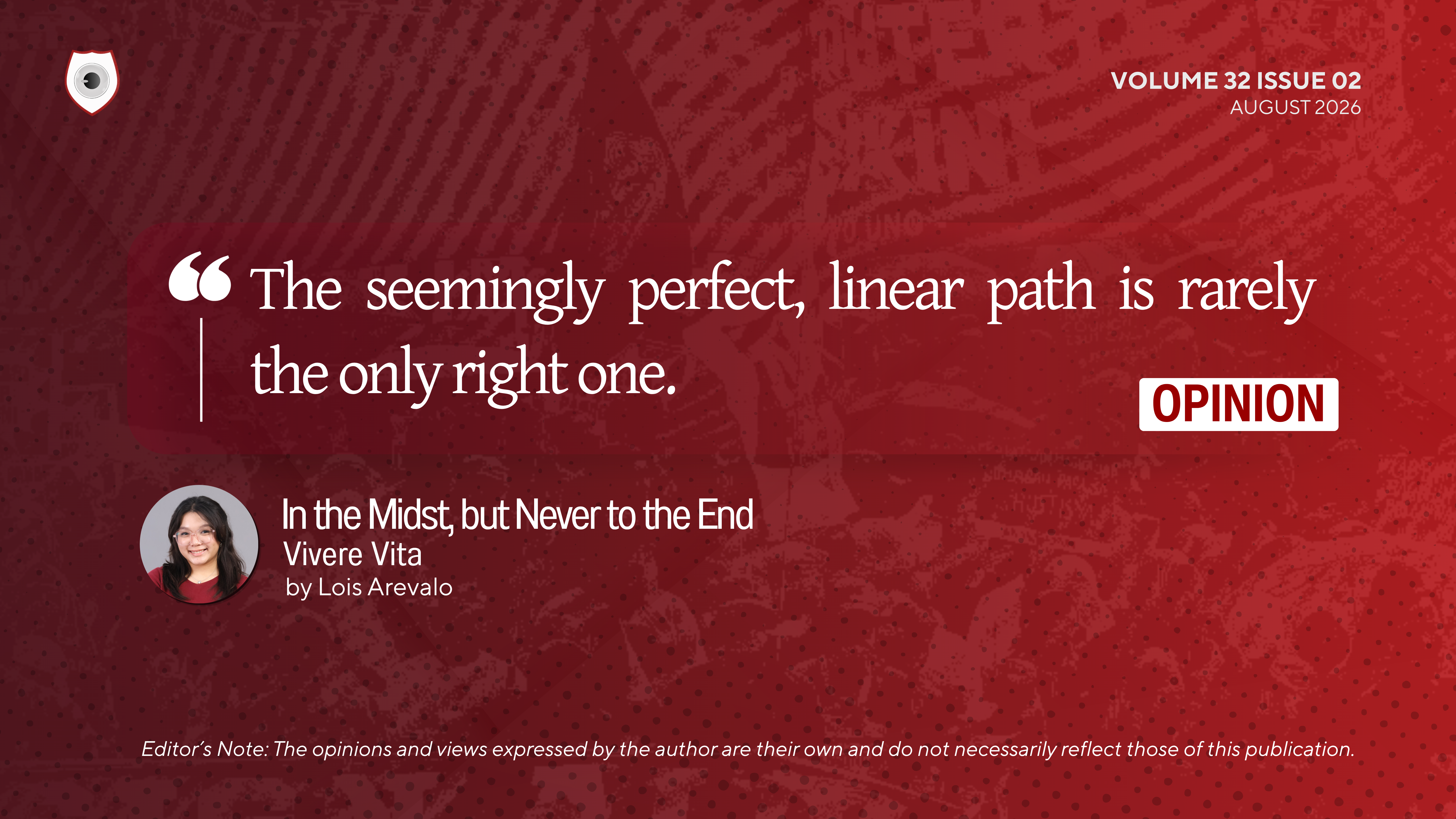
The seemingly perfect, linear path is rarely the only right one. So, just like the seams in Kintsugi, our detours do not ruin the pottery; rather, they are the moments that give our stories their depth.