By Alisandra Untalan | September 13, 2026

By Alisandra Untalan | September 13, 2026
EVERY September, something shifts in the Filipino reading calendar. Shelves are cleared, budgets are set weeks in advance, and thousands of readers make their way to the SMX Convention Center in Pasay City.
This year, the Manila International Book Fair (MIBF) runs from Sept. 9 to 13, opening its doors from 10 AM to 8 PM daily. Under the theme “Get Lit: Reading in a New Light,” the event once again proves itself less a marketplace and more a homecoming for the country's book-loving community.
A Fair Built on Two Floors
First-time fairgoers can easily make the same mistake: explore the ground floor, grab a few discounted titles, and leave without realizing that SMX’s second level also houses part of the fair. The upper floor has additional exhibit halls, a second stage, meeting rooms, and vendor booths that offer a different set of finds from those downstairs. For an event this size, treating MIBF as a single-floor affair means missing much of what the fair has to offer.
The fair has long outgrown the idea that it is purely for novels and textbooks. Alongside literary titles, attendees can browse educational technology, interactive learning tools, art supplies, journals, and even personalized stationery made on the spot. It's this range: practical, creative, and academic all at once, that keeps drawing in not just book lovers, but teachers, students, hobbyists, and gift-shoppers alike.
What a Screen Can’t Replace
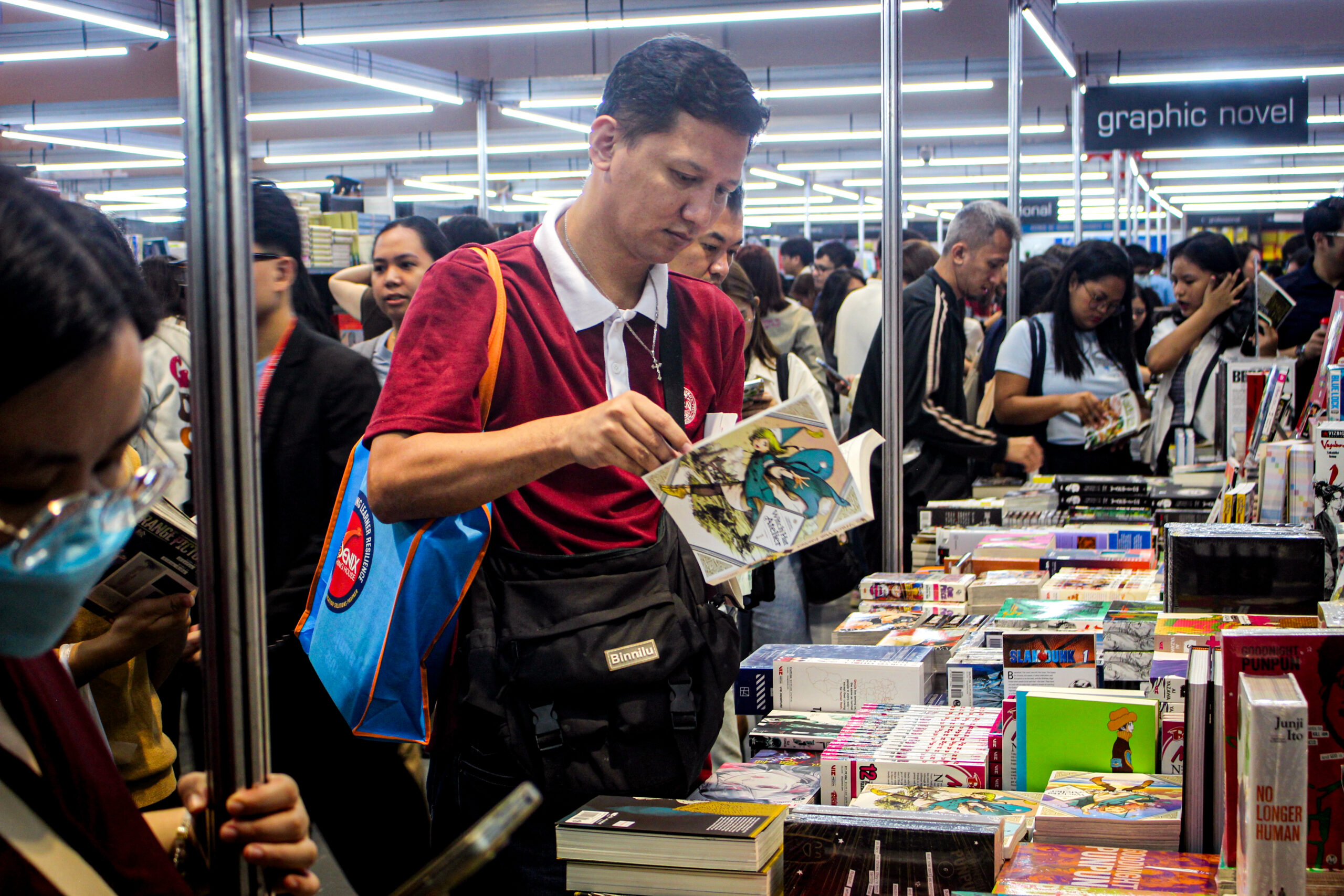
MIBF project officer Melanie Desor said the fair continues to attract readers despite the rise of digital media and audiobooks. For her, part of its appeal is the experience of physically browsing books before buying them.
“You don't see what's inside; at the fair, you can read a few pages before you've spent a peso,” she said. The chance to browse and choose a book in person, she added, continues to bring fairgoers back, including those who also read on their phones.
It's also about discovery you can't algorithm your way into. An e-book store recommends titles based on what a reader has already bought, while a fair can place a first-time author’s debut collection just a few booths away from a bestseller. With more than 150 exhibitors, readers can encounter books they may not have searched for or found online.
Where the Book Community Actually Gathers
What makes MIBF significant to the Filipino book community isn't just the scale of the discounts — it's who shows up. This year's roster includes musicians-turned-authors Miguel and Paolo Guico of Ben&Ben, food historian Felice Prudente Sta. Maria, broadcast veterans Howie Severino and Lourd de Veyra. Their presence, alongside publisher-hosted signings and meet-and-greets, turns the fair floor into a space where readers meet the people behind the pages they've long admired.
With more than 150 exhibitors this year, the list tells its own story about the breadth of the local industry. Long-running retail names like Fully Booked and National Book Store sit alongside homegrown publishing houses such as Adarna House, Anvil Publishing, Ateneo de Manila University Press, and 19th Avenida Publishing House, while comics and popular-fiction specialists like Komiket Studios, Comic Odyssey, and Psicom Publishing share the floor with heritage and academic institutions — the Cultural Center of the Philippines, the Komisyon sa Wikang Filipino, and the National Historical Commission of the Philippines — that rarely get this kind of public spotlight. International players like Penguin Random House SEA round things out, giving the fair a genuinely cross-section feel: local craft and global reach under one roof.
Atty. Joseph Noel Estrada, one of the authors behind a Rex Education title launched at this year's fair, sees something bigger in the crowds filling the SMX halls. “Watching students and professionals alike show up for a book fair, rather than a concert or a celebrity appearance, is proof that reading — often dismissed as a fading habit among the youth — still has a devoted audience worth supporting,” he said. His advice to anyone hoping to publish someday was just start writing, and the rest will follow.
Ms. Desor offered a broader view from the organizing side. She noted that the fair, now in its 47th year, with organizers already looking ahead to a 50th anniversary, remains the country's biggest venue of its kind, drawing an increasing number of exhibitors each year who want to introduce their titles to a dedicated audience. Her hope for every visitor, she said, is simple: “that they leave having found exactly what they came looking for, at a price that made the trip worth it.”
More Than a Shopping Trip
Strip away the discounts and the crowds, and what's left is a simple but powerful function: MIBF is one of the few times each year when the entire ecosystem of Philippine reading culture, from publishers and authors to educators, booksellers, and readers, occupies the same physical space.
No e-book store, however extensive its catalogue, offers the same experience as a lawyer-turned-author signing copies a few feet from a first-time reader, or a teacher walking in for free and leaving with a stack of classroom material picked out by hand.
As Desor put it, the fair is meant to be a house where everything can be found. Forty-seven years in, that sense of discovery continues to bring readers, authors, and educators back, screens and all.