By John Marion De Guzman | November 28, 2026

By John Marion De Guzman | November 28, 2026
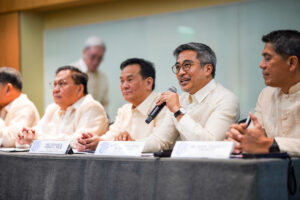
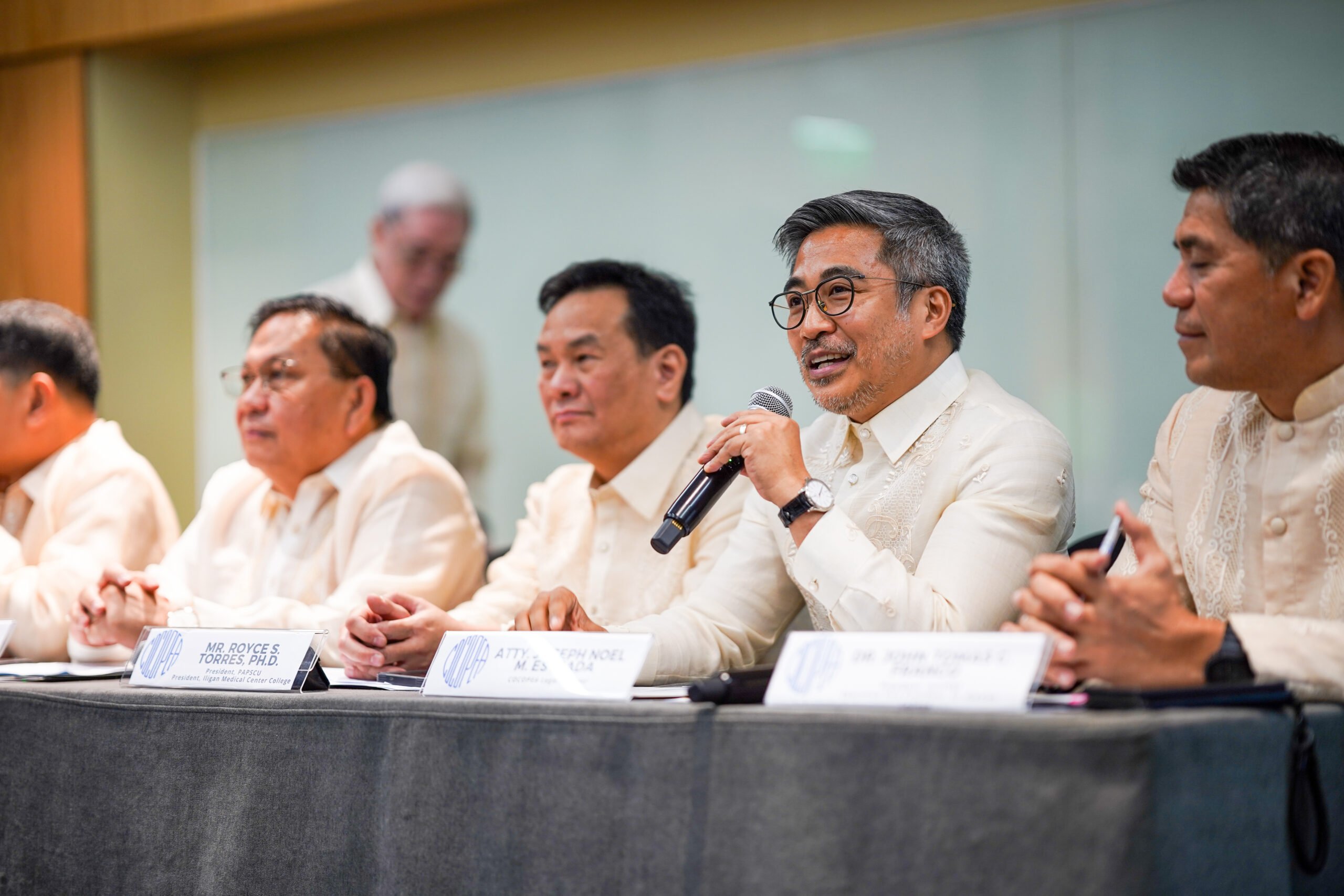
THE Coordinating Council of Private Educational Associations (COCOPEA) held a press conference last Nov. 24 at the conference room of SMX Convention Centre Aura, Taguig City, calling for stronger educational reforms and to put Filipino families at the core of education policy.
The panel of the press conference included the executive committee of the council, namely Dr. Irineo Alvaro Jr., Chairperson of COCOPEA; Fr. Karel San Juan, President of the Catholic Educational Association of the Philippines (CEAP); Mr. Royce Torres, President of the Philippine Association of Private Schools, Colleges, and Universities (PAPSCU); Dr. Victoriano Tirol III, President of the Philippine Association of Colleges and Universities (PACU); Dr. John Tomas Franco, President of the Unified TVET of the Philippines (UniTVET); Atty. John Jacome, Managing Director of COCOPEA; and Atty. Joseph Noel Estrada, Legal Counsel of COCOPEA.
Expanding education choices and strengthening child protection
Dr. Alvaro extended the council’s gratitude to President Ferdinand “Bongbong” Marcos Jr. for signing Republic Act No. 12327, or the Basic Education Voucher Program Act—allowing qualified Filipino students from Kindergarten to Grade 12 to enroll in participating private schools, helping ease public school congestion and support private institutions, calling it a “transformative mechanism,” highlighting it as a crucial step to ease the overcrowding in public schools.
“The voucher program is a real game changer in re-centering our education policy around the Filipino family, not just decongestion,” Dr. Alvaro stressed.
Fr. San Juan also addressed that the council underscores the necessity to strengthen student discipline and character formation amidst the increasing concern over bullying, school violence, and other behavioral challenges that continues to affect educational institutions. “The psychology and emotional well-being of our children are very complex. We need to have very strong, updated and improving formation programs to emphasize values like camaraderie, positive behavior, and friendship in our campuses.”
Fr. San Juan also called for the prohibition of corporal punishment while emphasizing the need for fair discipline and stronger collaboration among school administrators, teachers, parents, and students in implementing child protection policies.
Sustainability challenges and current state of private institutions
Dr. Alvaro called for policy reforms that would give private schools and training institutions greater flexibility in their learning arrangements, allow fair and timely tuition adjustments, ensure the prompt release of government subsidies, and reduce unnecessary regulations.
He further called for lawmakers, school leaders, parents, education regulators, and teachers to act with a shared purpose to build an accessible, resilient, and disciplined educational system. “Education is imbued with public interest, and true progress happens when the public and private sectors move as one Philippine education system.”
Lower rate of enrollment in private institutions
Dr. Alvaro recognized the low enrollment rate in private institutions as a struggle while recognizing its stark difference from subsidized institutions like state colleges and universities, attributing it to the incomparable salary of teachers. He further added the problem of migration, with teachers transferring from private to public schools as a factor.
“We really need to sustain our existence despite all of this, kaya nga this R.A. 12327 is a good start because I hope this is a work in progress that could extend up to the tertiary,” he said, explaining that it is yet to be addressed.
Dr. Alvaro further took into account the rising cost of living, noting that the council is really affected and “we are really trying to do our best to exist amidst this issue.”
Tuition fee increase
On the issue of tuition fee increases, the chairman said that the council recognizes their necessity for institutions that have no other source of funding apart from tuition fees.
“We are expecting a true complementarity na gagawin ng gobyerno na hindi lang pag kailangan doon kami pumapasok,” Dr. Alvaro stated.
Fr. San Juan attributed the war in Iran to rising fuel costs, citing that all economic forecasts provide that it’s going to be a terrible economy for the Philippines.
He further added that private schools are “very sensitive” to such economic forecasts stating, “We are really tuition dependent so therefore, our ability to run our schools are really affected by local and national economy.”
Atty. Estrada, on the other hand, added that their call is for CHED and DepEd to review their tuition guidelines, saying, “Hindi lamang ito para sa mga estudyante, para rin sa mga faculty at ‘yung mga institutions to make them sustainable.”
AI use in learning
Amid the growing reliance of students and teachers on AI in the academe, Dr. Tirol said that they are still working to understand the technology, including its current capabilities and potential.
He states that PACU is one of the first associations that formulated an ethical use of AI policy. “We don’t want to shortcut the learning process through AI, but we want to instill critical learning and really authentic quality education of learners and teachers.”
Atty. Jacome echoed this sentiment providing that there are some things needed to regulate considering its advantages and disadvantages; it must be pursued for ethical use for the benefit of everyone.
Volume 32 | Issue 5