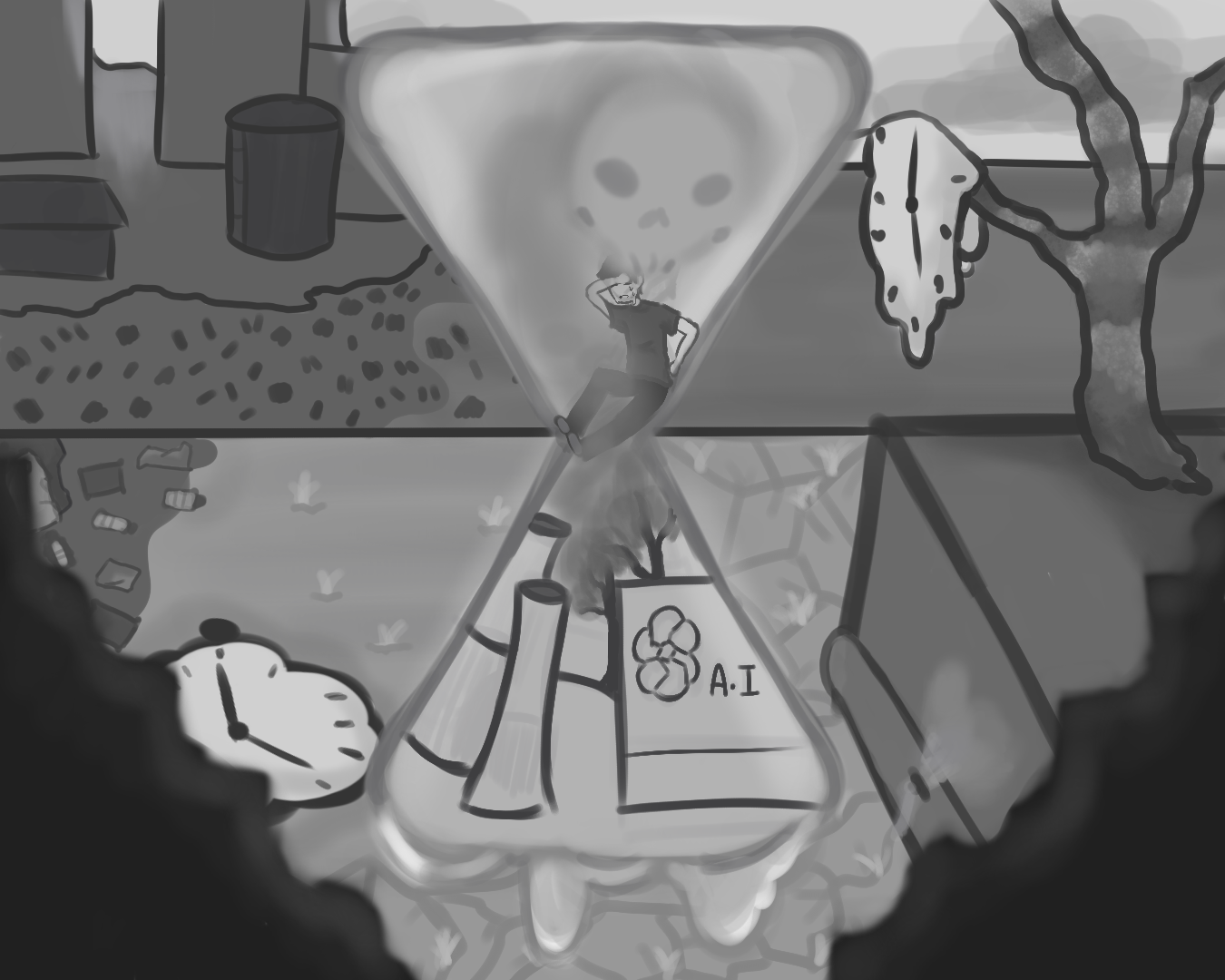
The world is shifting toward a climate “overshoot” approach as global warming moves beyond the 1.5-degree Celsius target set under the Paris Agreement, with scientists and policymakers focusing on limiting the extent of warming and eventually bringing temperatures back down.
Climate scientists set 1.5 degree Celsius as a critical threshold to avoid the most dangerous, non-linear impacts of climate change. At this temperature, heatwaves, heavy rainfall, severe droughts, and intense tropical storms become significantly more frequent and severe.
A United Nations Environment Programme (UNEP) report provides that the trajectory assessments revealed that even under the most optimistic implementation of current national pledges, global warming will peak at less than 1.8 degrees Celsius to 2.6 degrees Celsius.
In response to the risk of exceeding the threshold, climate scientists and researchers have increasingly examined “overshoot” scenarios, which focus on limiting the duration and extent of warming above 1.5 degrees Celsius and eventually reducing global temperatures
An overshoot scenario allows for a period in which global temperatures exceed 1.5 degrees Celsius before efforts to reduce warming bring temperatures back below the threshold. It relies on rapidly cutting greenhouse gas emissions while also using carbon dioxide removal to reduce atmospheric carbon dioxide.
António Guterres, United Nations (UN) Secretary-General, states that “This summer’s scorching heat, raging wildfires, and deadly floods are a warning of what lies ahead. We must make the overshoot above 1.5 degrees as small and short as possible. That demands an overshoot of ambition.”
Severe Long-term Consequences
However, returning below 1.5 degrees Celsius would not erase all of the effects of an overshoot. Prolonged warming above the threshold could increase the risk of crossing climate tipping points, some of which may be difficult or impossible to reverse.
Potential tipping points include the collapse of major ice sheets, the degradation of parts of the Amazon rainforest and disruptions to major ocean circulation systems such as the Atlantic Meridional Overturning Circulation (AMOC). These changes could create feedback loops that further intensify global warming.
Ecological losses may also become permanent. Coral reef degradation, biodiversity loss and species extinctions cannot necessarily be reversed simply by lowering global temperatures after an overshoot.
Risks in the Nation
The Philippines remains highly vulnerable to climate change because of its exposure to sea-level rise, extreme rainfall, tropical cyclones, droughts and marine heatwaves.
PAGASA has warned that the Philippines is already experiencing the effects of climate change, including warmer temperatures, changing rainfall patterns and more intense extreme weather events.
Rising marine temperatures have also placed coral reefs under increasing pressure. In the Coral Triangle, which includes the Philippines, marine heatwaves and coral bleaching threaten ecosystems that support coastal communities and marine biodiversity.
Fishing communities in areas such as Bohol and Eastern Samar are already suffering from warmer ocean waters and shrinking fish catches, while degraded reefs leave coastlines more vulnerable to destructive typhoons.
According to the head of the Philippine delegation at the recent UN Climate Conferences, Secretary Antonia Yulo-Loyzaga, “The 1.5 degree Celsius goal is a survival threshold that is simply not optional for the Philippines.” Her statement emphasizes that exceeding this limit even temporarily in an overshoot scenario, triggers catastrophic, non-reversible ecological destruction such as coral reef collapse and island coastal loss that vulnerable nations cannot adapt to or recover from
Meanwhile the Climate Change Commission (CCC) explicitly frames 1.5 degree Celsius as “the threshold of chance and hope “ for vulnerable nations, arguing against pathways that treat overshoot as an acceptable risk.
The Two Pathways to Recovery
Limiting and eventually reversing an overshoot would require two key strategies: sharply reducing greenhouse gas emissions to limit peak warming and expanding carbon dioxide removal (CDR) to lower atmospheric carbon dioxide.
Rapid emissions reductions across sectors, including through renewable energy and the electrification of transport and industry, can help limit the extent of global warming. Every fraction of a degree avoided can reduce climate risks to vulnerable ecosystems and communities.
On the other hand, active CDR focuses on pulling past carbon dioxide out of the atmosphere and storing it permanently underground to pull global warming back below 1.5 degree Celsius by the end of the century.
Despite its potential role, an overshoot pathway carries significant physical, technological and socioeconomic risks. Prolonged warming above 1.5 degrees Celsius could increase the likelihood of irreversible changes and expose communities and ecosystems to greater climate hazards.