Written By Nicholas Miguel S. Endencia | December 11, 2025

Written By Nicholas Miguel S. Endencia | December 11, 2025
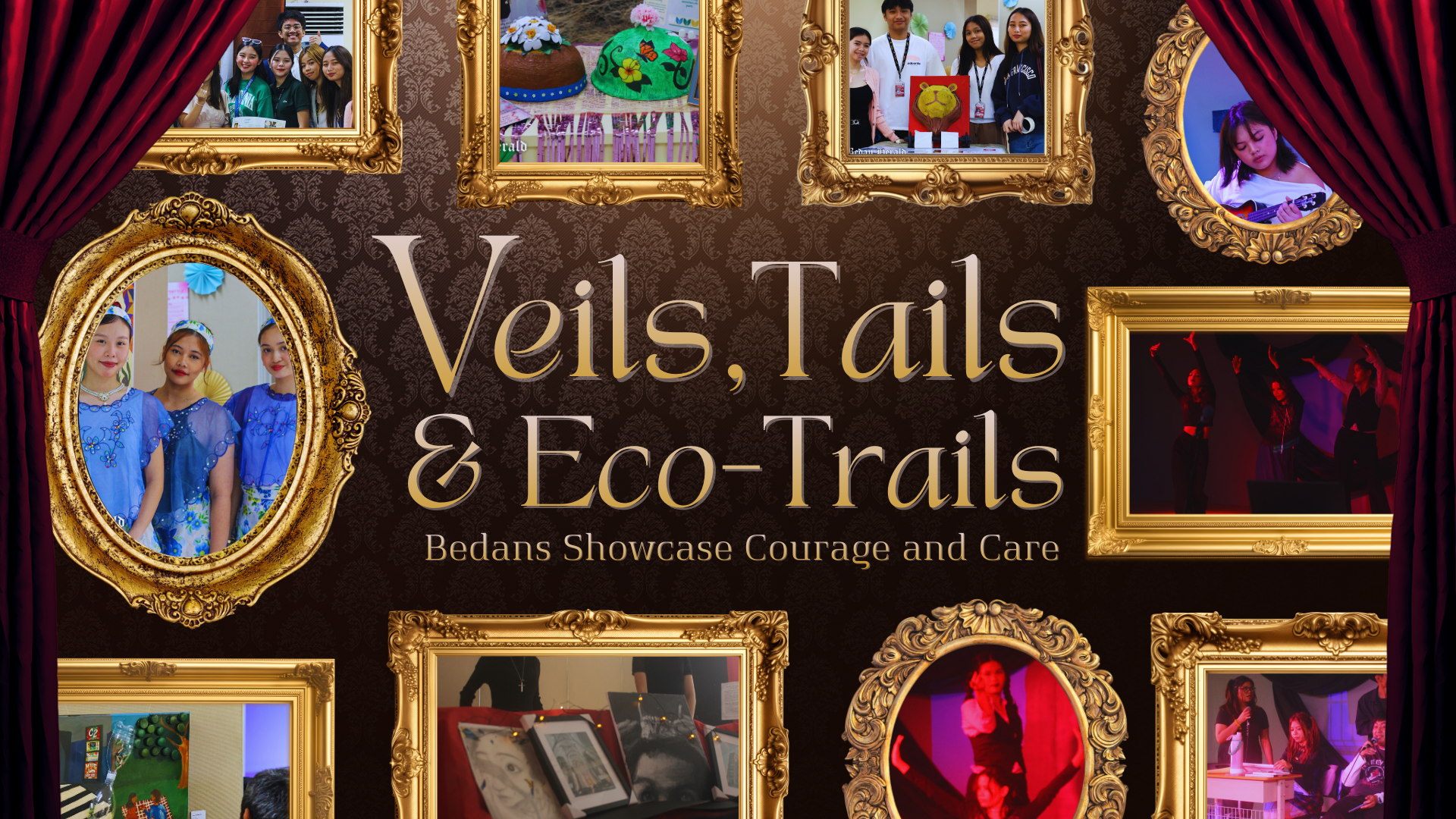
CREATIVITY among Bedans came alive when two simultaneous exhibitions transformed the Multipurpose Hall into a space of exploration, reflection, and expression. From the gothic-inspired “The Veil: an ode to beauty beneath the silent shadows” by BAP-1A to the environmentally focused “Kagandahan ng Kapaligiran tungo sa Kaginhawaan: Care for Our Common Home” by the International Studies students, the events revealed how art can carry meaning beyond aesthetic appeal.
The works they assembled showed how students can use style and symbolism to bring attention to what is often neglected. Music that shifted moods, storytelling that questioned expectations, dances that turned emotion into motion, and artworks that confronted power, and identity.
Across programs and years, students turned ideas, emotions, and responsibilities into tangible experiences, inviting visitors to engage, reflect, and be challenged. This highlighted the diversity of talent within the community, indicating that Bedan creativity thrives when collaboration, purpose, and expression converge.
Stories Told Through Grit and Craft
Last November 19th, the International Studies exhibit transformed the hall into a vibrant dialogue on ecological responsibility. Under the theme Care for Our Common Home, students created pieces that merged craft, sustainability, and symbolism that ranged from Air-dry clay pots crafted, featuring embossed designs, carved patterns, and recycled tiles. These pots carried messages about humanity’s responsibility to preserve the Earth, with floral motifs and sacred symbols underscoring the fragility and sacredness of the environment.
In between the displays, visitors found themselves drawn toward pieces that brought personal stories into environmental reflection. Some groups shaped their works around everyday objects that people often discard, turning waste into reminders of how habits have consequences. Others framed their visuals around cycles of loss and renewal, urging visitors to confront how ordinary choices ripple outward.
Visitors could also see the ECO-BEDANS art display, where dome-shaped headpieces adorned with flowers, butterflies, and repurposed materials showed how sustainability can be transformed into creative fashion.
Other highlights included a lion’s head sculpture inspired by Kapampangan craftsman Eduardo Mutuc, miniature woven accessories, folk-inspired masks and models, and a mixed-media piece that used an inverted plastic bottle to mirror the movement of environmental strain from urban spaces to natural ones. Together, these works showed how responsibility can be expressed through thoughtful design and resourceful material use.
The Veil showcased how students approached darkness, tension, and defiance through gothic-inspired expression. Music, dance, skits, and visual art combined to confront silence and societal expectation. Instrumental and vocal performances by Sebastian Cabral (I-BAP) set the tone, opening with Rammstein’s Du Hast and ending with Journey’s Faithfully, capturing the spectrum of human emotion from frustration to hope. Ash Dimaano (I-BAP)’s spoken piece, The Crimson Benediction, used religious symbolism to question traditional views of love, drawing inspiration from Frankenstein and Carmilla to challenge societal norms.
Visual pieces such as Coronation, a monochromatic painting of a crowned man built atop ruin, explored power and control, while the skit Their Own Reflection dramatized the process of collaboration and perseverance among students. Dance routines transformed movement into narrative, blending angular tension with sweeping motions of release.
Collaboration in Action
Both exhibitions reflected deliberate planning, collaboration, and intention. In the International Studies exhibit, Project Head Charlize Natan (II-BAIS) emphasized that the works aimed to inspire responsibility and reflection regarding the environment. With the International Studies department, the team carefully designed layouts so that each piece could shine independently while contributing to a cohesive message. Charlize noted that communication and patience were key, as differing opinions and creative approaches had to be consolidated into a unified presentation. For her, the most rewarding aspect was witnessing visitors from different departments interact with the exhibit and engage with the advocacy behind each piece.
For The Veil, Project Head Chloe Kirsten Saez (I-BAP) shared that the main idea was to provide a platform for unrestricted creative expression. A goal that allowed students to express themselves freely across all forms of art, showing how beauty and meaning emerge when challenges are confronted with courage. Themes were democratically chosen, reflecting a desire to present bold, defiant, and meaningful art. Layout Head Sophia Mikaela Cruz (I-BAP) described how making use of the large Multipurpose Hall with a small section required repeated planning and adaptation. Despite these obstacles, the students found fulfillment in seeing their collective vision realized, whether on stage or in visual displays.
A Collective Expression
Taken together, The Veil and Care for Our Common Home exhibits demonstrated the breadth and depth of Bedan creativity. Whether confronting darkness or advocating for environmental responsibility, students from different programs and years collaborated to produce experiences that were immersive, meaningful, and reflective of their shared values. The exhibits underscored how art can serve as both mirror and messenger, reflecting the creators’ personal journeys while inviting audiences to contemplate, challenge, and connect.
For the Bedan community, these showcases offered proof that imagination, courage, and collaboration are not confined to a single program or year; they are qualities nurtured across the community, creating a legacy of creative engagement that resonates far beyond the walls of the Multipurpose Hall.
Volume 31 | Issue 6