By John Marion De Guzman | October 23, 2026

By John Marion De Guzman | October 23, 2026
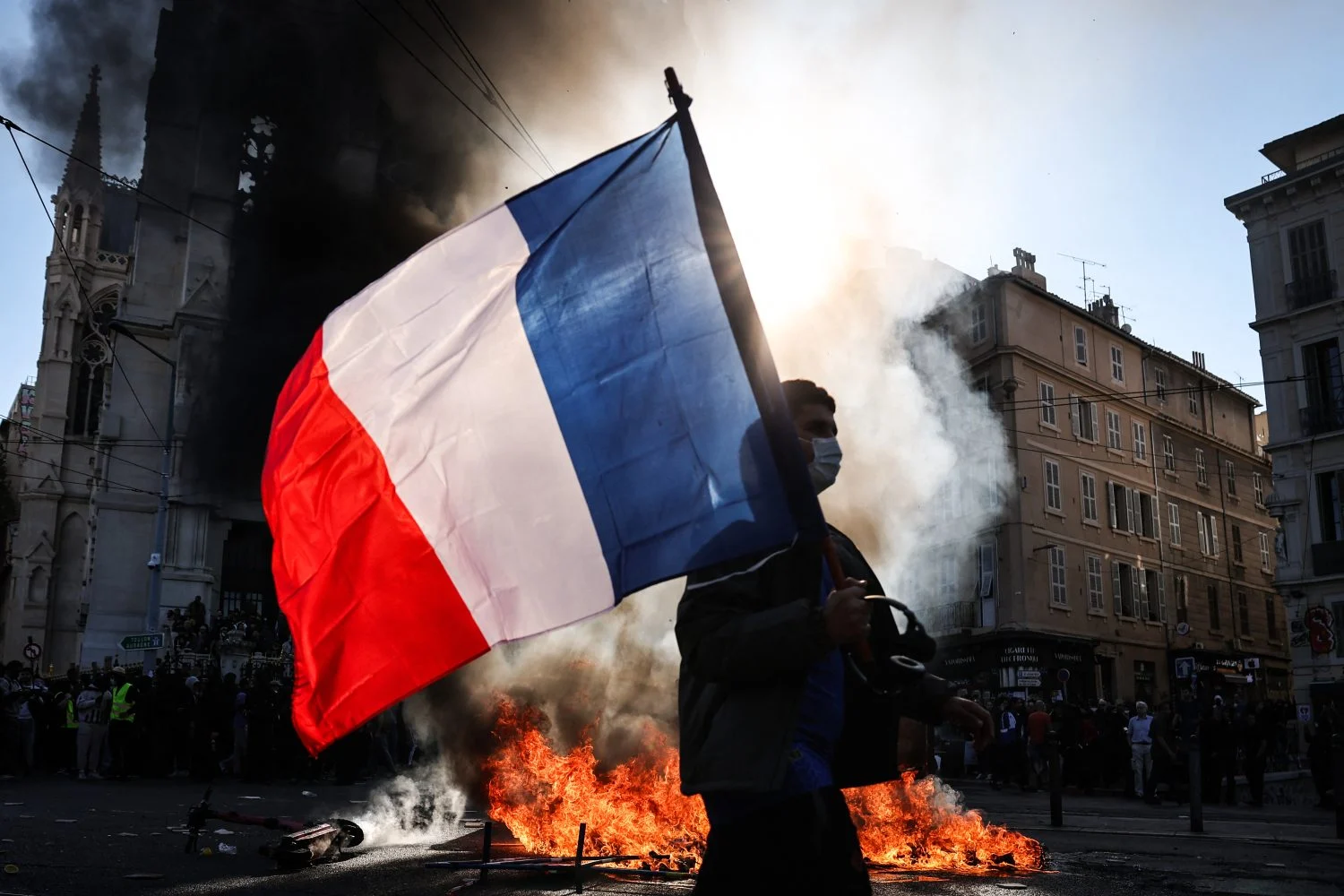
SPARKING anger over school conditions, rising living costs, and alleged government inaction, students at Lycée Saint-Exupéry, considered as an underprivileged school in the suburb of Créteil, took to the streets of Paris, France, last Oct. 17 to 18, joining protests that turned violent in some areas.
The French Interior Ministry reported that approximately 550,000 people joined the demonstrations on Oct. 17, with most marching peacefully, while some protesters looted shops, attacked buildings, and clashed with police, who reportedly fired tear gas and charged at the protesters.
Sebastien Lecornu, Prime Minister of France, stated that around 1,200 people were arrested and 150 police officers were injured. The riots were driven by frustration over declining public services and rising pressure on household finances, while further intensified by the belief that France’s political institutions offer little chance for meaningful change.
The start of the movement
The school blockades and protests trace back to September in several high schools within Paris’ northern-suburbs working-class. The students projected their dismay against shortages of educators and poor facilities. The movement then later spread to nearby cities including Lille, Nantes, Bordeaux, Marseilles, and Rennes.
On Oct. 17, the protests brought trade unions and students, along with supporters of the “Yellow Vest” movement—tracing its emergence from 2018, challenging economic inequality within the country, as well as the rising cost of living.
Emile Chabal, a professor at the University of Edinburgh, described the protests as “a natural consequence of a series of protests” dating back to the Yellow Vests movement. He further explained that it stemmed from financial difficulties and dissatisfaction with France’s presidential system, which often results in the election of centrist leaders such as the incumbent president, Emmanuel Macron.
The protests followed nearly a decade of Macronisme, the top-down governing approach associated with French President Emmanuel Macron after being re-elected as president in 2022, amid youth frustration over educational inequalities, perceived racial discrimination, and a government they felt ignored their concerns and offered little hope for the future.
It brought together longstanding public grievances, including demands for better school facilities, smaller classes, sufficient teachers, and improved working conditions. These concerns coincided with a nationwide public sector strike opposing the government’s proposed 2027 budget, which includes 54 billion euros in spending cuts and tax measures, as well as a proposed freeze on civil servants’ basic salary scale.
Chabal also said that the convergence of student and worker demands posed a major challenge to the French government as it brings the concerns altogether under one tight-knit umbrella. “The worst possible outcome for the French government,” he said.
Sociologist and Political Scientist Donatella della Porta stated that student protests were encouraging broader public action against inequality, reduced public investment, and threats to democratic rights, while calling for greater spending on social welfare instead of militarisation. “They do not want to fight wars; they want a different future,” she said.
Sue further links this movement to the younger generation’s collective action over what happened in Gaza, seeing Palestinian flags waved around at the protest over several European countries.
Government response
Following the street-wide protests, President Macron’s immediate response was to focus on public order, providing that those who are responsible for the violence caused be “prosecuted and punished” The comment was made as a fire severely damaged the historic town hall located in the city of Limoges, and other public shops and buildings were attacked in other areas.
Luxury shopping boutiques were also not spared during the widespread protest, with approximately 1,500 shops affected. Amongst the targeted were ransacked, looted, and vandalised were Sephora, Louis Vuitton on Rue Saint-Honoré, Lacoste on Boulevard des Capucines, Burberry, Christian Dior Parfums, Celine on Avenue Montaigne, and Arc’teryx on Boulevard de la Madeleine. Some of the graffiti displaying slogans read as: “tax the rich,” “capitalism kills,” and “Fauchés mais en Lacoste,” meaning “Broke but in Lacoste,” were spotted on walls.
These damages only constitute a minority of the larger protest and collective action. Leader of the left-wing France Unbowed party, Jean-Luc Mélenchon, accused the government of suppressing students and allowing the tension to escalate.
His argument made experts believe that it reflects a broader political debate over whether the government should focus on controlling the protests or addressing the grievances uniting the different groups involved.
Chabal said the protests dealt a significant setback to Macron, whose promises of a renewed and dynamic France have been weakened by his failure to clearly present his political agenda and his perceived lack of empathy.
Guya Accornero, a specialist in social movements at the University Institute of Lisbon, said that previous clashes had deepened tensions between protesters and law enforcement. According to Human Rights Watch, a 15-year-old lost a hand after being hit by a police stun grenade, while a 14-year-old sustained a shattered jaw from a tear gas canister fired at close range. The organization condemned the use of excessive force against children, noting that the protests had been largely peaceful.
“Young people have been violently repressed also when using non-disruptive tactics,” she said.
Volume 32 | Issue 4