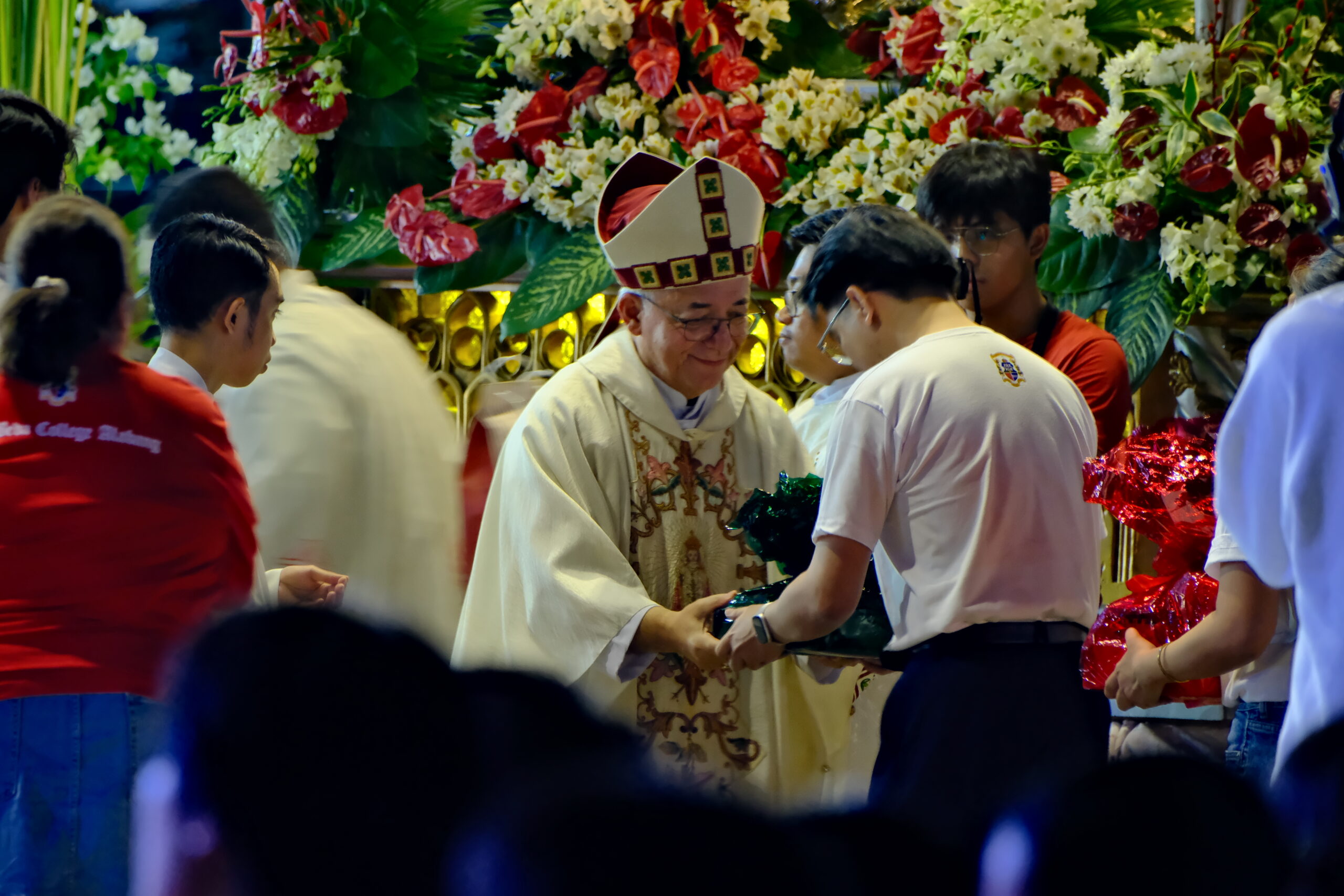
STUDENTS, faculty, alumni, and members of the community gathered at San Beda College Alabang (SBCA) for the third day of the Sto. Niño celebration. The event brought together participants from Basic Education, High School, Technical High School, and the Tertiary and Graduate Schools for activities highlighting culture, sports, and religious devotion.
Students from Nursery to Grade 2 kicked off the event with festival-themed field demonstrations inspired by the Tawo-Tawo and Pahiyas festivals. Their colorful costumes and handcrafted props showcased creativity while highlighting an appreciation for Filipino traditions.
While the lower grade levels performed outdoors, High School and Technical High School students proceeded to the Sports Complex for the basketball and volleyball exhibition games held in the morning.
In the afternoon, the celebration moved toward its religious core. Students, faculty members, and staff participated in a procession honoring Sto. Niño. Devotees carried sacred statues and banners while the community walked prayerfully from the San Buencamino Gate and looped back to the open field.
The Sto. Niño festivities concluded the celebration with the celebration of the Solemn High Mass, which was officiated by Abbot Ignasi Fossas, OSB, Rev. Fr. Gerardo Ma. De Villa, OSB, and the Benedictine Monks.
Fr. De Villa emphasized that the Bayanihan spirit shines in SBCA as the community honors Sto Niño. He shared that the Child Jesus reflects a Filipino’s heart—strong amid life’s storms, and trusting in God.
He further reminded everyone that Sto Niño Celebration is more than bands, music, and food, but a call to “malasakit,” hence caring for others, showing compassion, and practicing forgiveness
The Eucharistic celebration centered on gratitude, humility, and devotion, aligning with the Bedan values of faith and community.
The success of Sto. Niño 2026 underscored the support of students, organizers, and faculty members, reflecting the institution’s commitment to culture, spirituality, and community involvement.