Written By Haniel Mizukami | December 30, 2025

Written By Haniel Mizukami | December 30, 2025
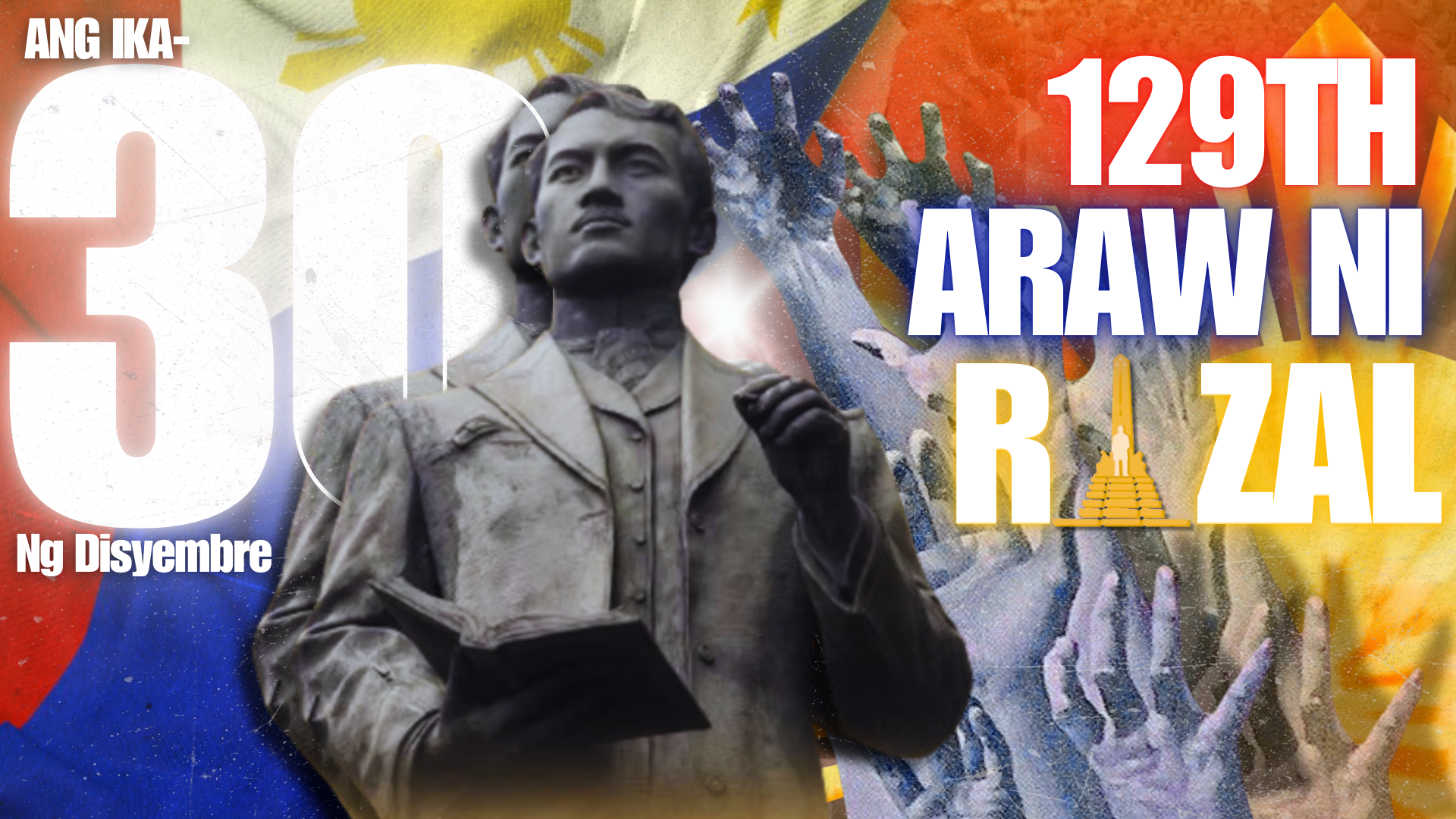
“WHO is the Philippine national hero?” a debate that Filipinos would often bring up, as there is no definitive law defining what it requires to be a national hero. But back when we were still in our elementary years, teachers would often mention various names that have forever been carved in our history. We learned about battles, revolutions, and acts of courage against oppression, but one name stood out above the rest: a man who defied tyranny with nothing but pen and paper — Jose Rizal, whose words cut through and pierced the hearts of Filipinos, igniting a revolutionary spirit that continues to flow in our veins to this day.
But this presses the question: does Rizal truly deserve the title of national hero?
Rizal, The First Filipino
Jose Protacio Rizal Mercado y Alonso Realonda, also known as Jose Rizal, has carved his name and wrote a lasting legacy that inspired many Filipinos to fight for our human rights. His novels, mainly ‘Noli me Tangere’ and ‘El Filibusterismo,’ opened the eyes of the majority, which contributed to the 1896 revolution; wherein heroes like Andres Bonifacio, Emilio Jacinto, and Apolinario Mabini took part in the revolution against the Spaniards.
According to Leon Ma. Guerrero, a renowned Filipino diplomat, writer, and the man who wrote “The First Filipino” biography about Rizal, the latter embodied the Filipino nationality. He was among the first who recognized the Philippines as a single nation under colonial rule, at a time when most people identified with their town or province instead of being a full Filipino. His novels deeply reflected his patriotism and his call for justice under colonial rule, awakening national consciousness through words and ideas rather than bloodshed.
Guerrero viewed Rizal as a man who embodied the Filipino spirit in a modern, national sense. Hence, he believed that Rizal is the first Filipino. But of course, not in a literal way as one may think of.
Rizal, A Revolutionary
It is common knowledge that Rizal is a well-known reformist, one who valued peace and reformation rather than a violent revolution. Because of this, the Americans later highlighted his image and promoted him as the national hero during their colonization in the Philippines. Some critics would even argue that Rizal is considered a “Made in the USA” hero merely because his name was supported by the Americans as they took control of the country in 1898, following the Treaty of Paris. Historian Renato Constantino, the writer of the 1970 essay “Veneration without Understanding,” described Rizal as an “American-sponsored hero.”
This view stems from the belief that the Americans sought to prevent any unwanted violence or rebellion against their rule. By promoting Rizal, a hero who advocated gradual reform rather than an armed revolution, they presented a model of patriotism that discourages violence and rebellion. However, this belief overlooks an important historical fact: even before the Americans had colonized the Philippines, Emilio Aguinaldo, the acknowledged leader of the de facto republic, had already proclaimed that Rizal is the national hero.
John Nery, the author of the novel “Revolutionary Spirit,” viewed Rizal not merely as a national hero in the Philippines, but also as a revolutionary symbol whose influence resonated beyond the nation. Nery argued that Rizal’s novels and ideas carried a universal message that transcended to colonized countries across Southeast Asia who were struggling against colonial rule. Through his ideologies and his call for justice, Rizal became a significant figure whose writings transcended borders. In this sense, his works did not only awaken the minds of the Filipinos themselves, but also solidified his place as a revolutionary symbol whose impact extended far beyond our homeland.
Rizal, The National Hero
Rizal’s legacy continues to challenge Filipinos to think critically and question the injustice that is happening in our nation. In every classroom, literature, and institution across the country, his lasting ink reminds each generation that the struggle for freedom would eventually be conquered only if we sustain our revolutionary spirit to defend our human rights and confront the tyranny and corruption that continues to persist to this day.
While the question of who is truly deserving of the Philippine national hero title is still up for debate, Rizal’s impact on our history and his role in Southeast Asian countries is something no one can deny — as he proved that while his approach and ideologies may differ from those who partake in the 1896 armed revolution, he ultimately believed that the Philippines would one day reclaim the nation and gain its independence once more.
Volume 31 | Issue 6