Written by The Bedan Herald | February 25, 2026

Written by The Bedan Herald | February 25, 2026
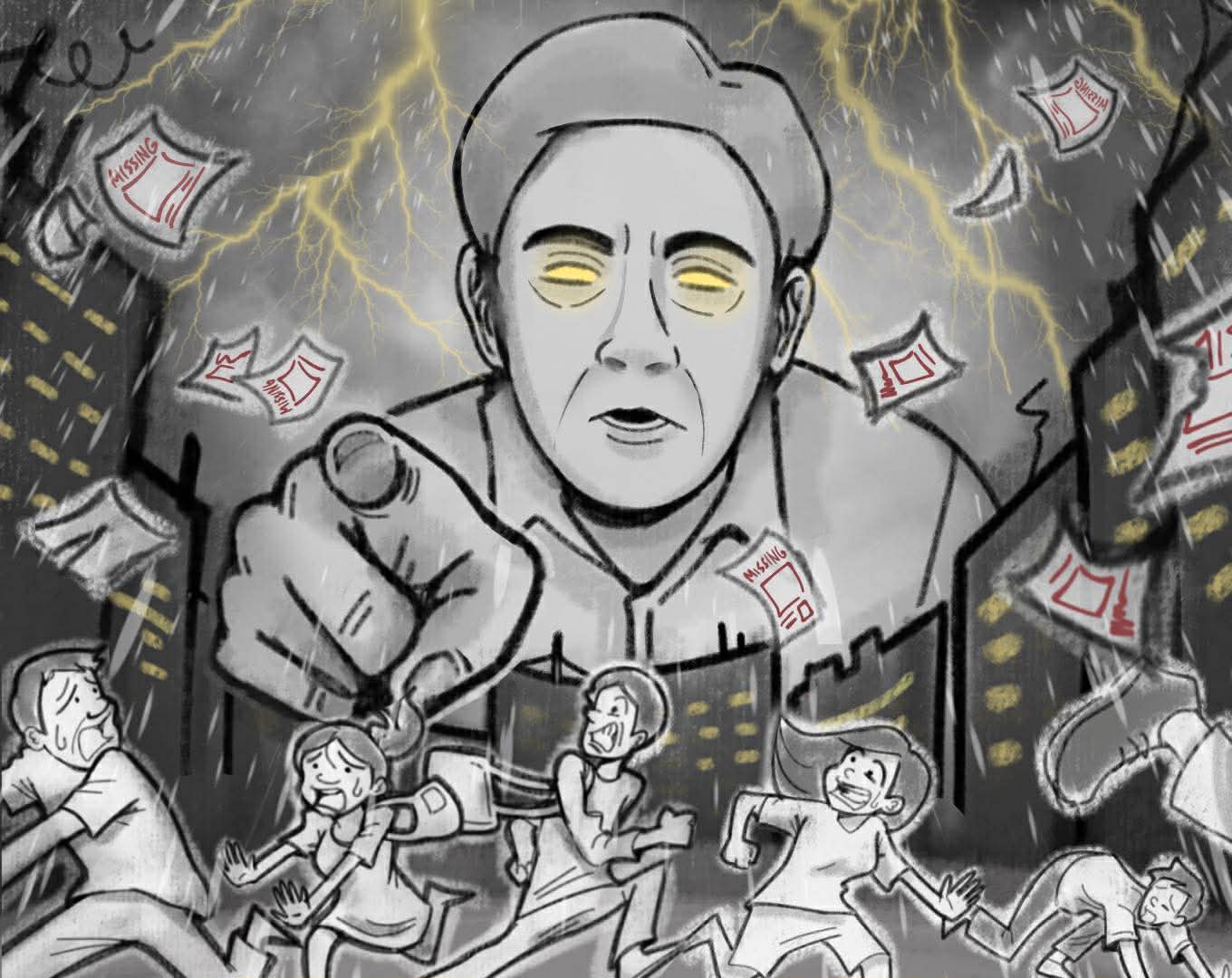
FORTY years have passed since millions of Filipinos filled the streets in a peaceful uprising that would forever change the nation’s course. Yet the shadows of the past remain deeply rooted in the national consciousness. The Philippines endured one of the most grueling and turbulent periods under the regime of former President Ferdinand Marcos Sr., when martial law was declared on September 21, 1972, and devoured the country like a powerful typhoon—its blustering winds sweeping a gale of oppression and fear, leaving some places untouched while ruthlessly tearing through others. Just as a storm reshapes the land, this tumultuous period left the nation with enduring scars; some communities prospered, others suffered, and the lessons from its ferocity remain painfully relevant today.
Nonetheless, the voice of the people echoed with calls for justice and freedom as the dark regime came to a close during the 1986 People Power Revolution, when millions of Filipinos flooded Epifanio de los Santos Avenue (EDSA), standing hand in hand in a collective act of courage and defiance against oppression.
However, in a twist of irony, the historic victory for democracy reveals that the passage of time has revealed how fragile collective memory can be. The rise to power of Ferdinand “Bongbong” Marcos Jr. in winning the presidential elections in 2022 was somewhat historic — not only due to the sheer number of votes totalling 31 million, but also for returning the Marcoses' name to the executive office, three decades after his father was ousted in the same position. This resurgence places a stark reminder of the martial law’s enduring shadow: the very period marked by oppression, censorship, and human rights violations that shaped the Philippines’ modern history now finds echoes in contemporary politics, raising questions about remembering our past and the lessons that must not be forgotten.
While the walls of Manila bore the stain of blood during Marcos Sr.’s regime and declaration of the Martial Law, his hometown of Ilocos Norte experienced a very different reality. Programs promoting land distribution, infrastructure, and irrigation brought tangible benefits to the province. Unlike the ‘Never Forget, Never Again’ murals in Manila that serve as solemn reminders of oppression and human rights violations, Ilocos Norte tells a contrasting story of progress—its grand infrastructure projects standing as symbols of a period that some residents remember as a ‘golden era.’
It can be deduced that the Marcos Sr. administration is remembered for its ambitious infrastructure, ranging from cultural landmarks and large infrastructure projects such as the Bataan Nuclear Power Plant, the Cultural Center of the Philippines Complex (CCP), the Manila Film Center, and the San Juanico Bridge—projects that symbolized the regime’s vision of progress and modernization, particularly in areas favored by the administration. However, these notable achievements in public infrastructure did not come without a price; the projects, funded through foreign loans, left the Philippines with $28.3 billion in outstanding debt and were frequently characterized by corruption, overexpenditure, and extravagance.
In Metro Manila, student activists were rounded up; from Central Luzon to Mindanao, entire communities were militarized under the pretext of national security. When martial law was declared, Marcos ordered the closure of nearly all mass media outlets, leaving only government-controlled stations such as the Voice of the Philippines and the Philippine Broadcasting System on air. Leading newspapers and magazines—including the Manila Times, Daily Mirror, Manila Chronicle, Philippines Free Press, Graphic, and Nation—were padlocked overnight. Only the Manila Bulletin was eventually allowed to reopen under a new name, while select networks resumed operations under the control of Robert Benedicto, a close Marcos ally who consolidated television, radio, and telecommunications enterprises under his influence.
The assault on free expression did not stop at institutions; it reached individuals whose only weapon was the written word. Liliosa Hilao, a Communication Arts student, wrote critical essays for the students’ news publication, entitled “The Vietnamization of the Philippines” and “Democracy is Dead in the Philippines under Martial Law.” Arrested and detained, she was later reported by authorities to have died by suicide after allegedly ingesting muriatic acid. Yet her body bore signs of torture and sexual abuse—evidence that contradicted the official narrative and underscored the brutal realities faced by those who dared to speak. In stories like Hilao’s, the true cost of censorship becomes painfully clear: when truth is criminalized, even students become targets, and the price of dissent is measured in broken lives.
With the shutdown of the free press, the perceptions of the period—notably among certain regional groups—are shaped by localized experiences that differ from the widespread undocumented repression in other parts of the Philippines. At times, these lived accounts may clash with the country's collective memory, creating a divide between regions favored by the past administration and the rest of the nation. These forged narratives of development and a false perception of a ‘golden era’ stand as a mockery to the oppressed, the overpowered, and the ostracized.
Now, the pressing question lies in how the nation will continue to remember its history and preserve the voices that once fought back against the Marcos regime. To risk forgetting is to forgive the atrocities they’ve committed, to protect the oppressors, and to betray the very people whose blood stains the peace that we hold today. The quote “Those who cannot remember the past are condemned to repeat it,” by Spanish Philosopher George Santayana, rings all the more true as it stands as a reminder that history must remain rooted in documented truths, as the danger lie not only in historical omission, but in historical distortion, where the story becomes selective or conveniently reframed to fit their alibis. Because when societies allow painful truths to be swayed by twisted narratives, they create conditions where past abuses can be justified, or, worse, repeated under new leadership.
If martial law once descended upon the nation like a violent storm, then history reminds us that it must be remembered in its entirety. Not all houses were spared, not all communities were taken care of, and not all casualties were reported. Some structures stood tall, some communities perceived a peaceful era, but the countless masses bore the weight of the administration.
While those who witnessed the tyranny firsthand continue to persevere to tell their stories, the burden of remembering the past will eventually fall to us and to those who will come after. To remember the lived realities of those who came before is an act of revolution in and of itself, ensuring that the lessons of the past do not erode with the passage of time and that the voices that once fought against tyranny are never reduced to mere footnotes in history.