By Nicholas Miguel S. Endencia | January 22, 2026

By Nicholas Miguel S. Endencia | January 22, 2026
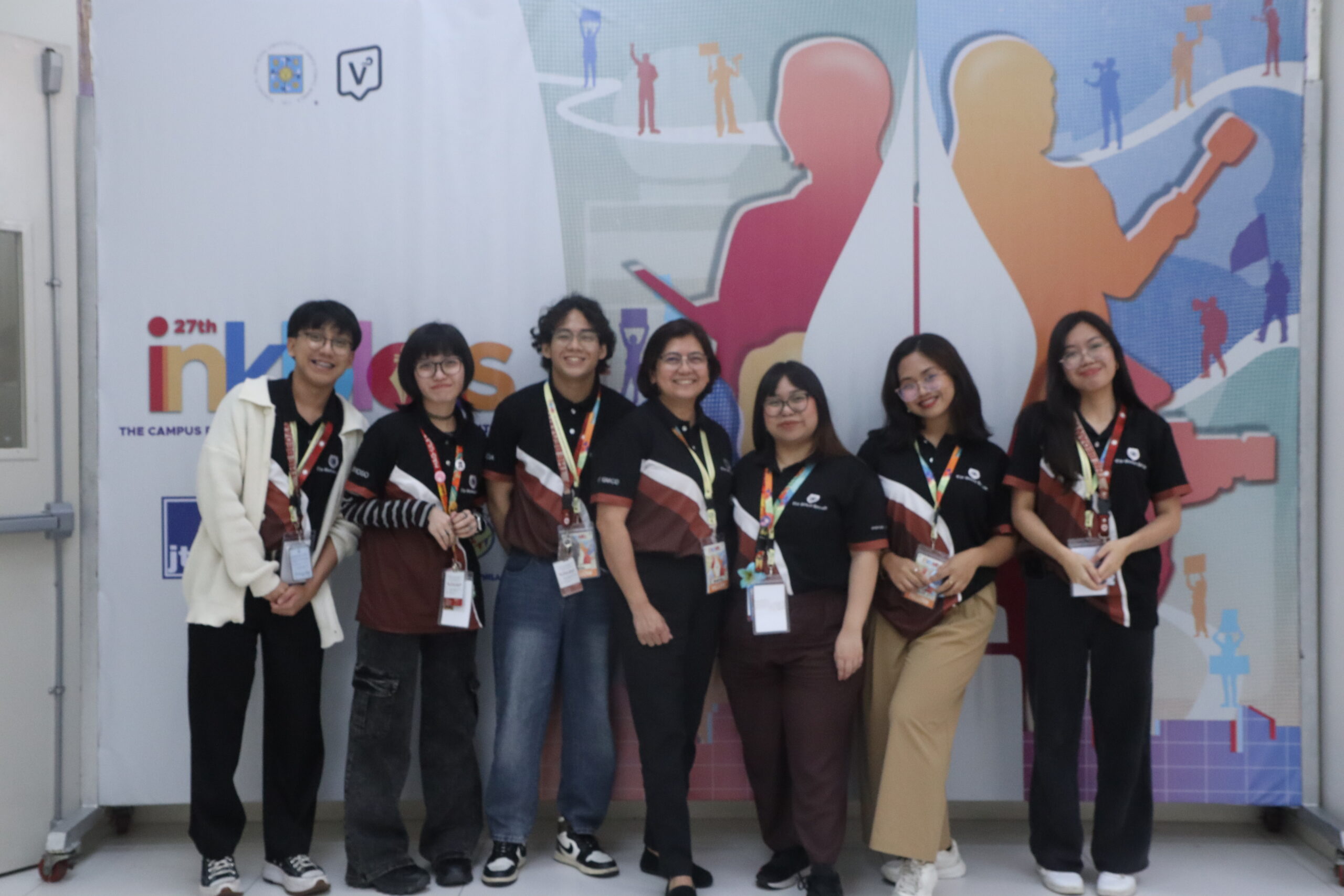
MORE than 200 campus journalists from 25 schools and student publications gathered at the University of Santo Tomas (UST) last Jan.13 and14 for the 27th Inkblots Journalism Fellowship, a two-day conference that put the campus press under scrutiny as a public watchdog and as a training ground for accountability.
Inkblots traces its roots to 1999, when it was founded by journalist Christian Esguerra to mentor student reporters and raise standards in campus journalism. Over the years, it has hosted figures such as Maria Ressa, Mike Enriquez, and F. Sionil Jose, building a reputation as a proving ground for future journalists.
Held at the University’s St. Pier Giorgio Frassati, O.P. auditorium at España, Manila, the fellowship carried the theme “Campus Press and the Fight for Public Accountability,” framing student journalism as a practice with consequences that extend far beyond university walls.
This year’s Inkblots centered around the persistence of corruption and declining trust in public institutions, calling on student journalists to hold officials to account while also holding newsrooms to account themselves. With the student body relying on campus publications, reports play a vital role in understanding the power dynamics within the government. Through this, responsibility was placed squarely between the press and the public it serves.
First Day
The fellowship opened with a keynote address, followed by talks and discussions on investigative reporting and newsroom power. Karol Ilagan, chair of the Department of Journalism of University of the Philippines-Diliman, explains that campus journalism often serves as the students’ first encounter with governance, where principles such as impersonality, transparency, and fairness should ideally be upheld.
Ilagan also introduced a narrative structure, and suggested that stories, whether in journalism or governance, are constructed in ways that can reinforce or challenge authority. It explains that effective reporting frames issues through time: the present presents the news or current problem, the past explains the cause and roots of the issue and future points to the impact or solutions.
Ilagan explains how the country is deeply politicized, from geography to social location, and how it can influence access to resources, opportunities, and representation, shaping who holds power and who is marginalized.
Arlene Burgos, chief content officer of Inquirer.net, warned against confusing accountability with attack, arguing that public interest reporting must stay grounded, measured, and transparent. “If you want others to be accountable, you must be accountable to your audience and to each other,” she said.
Sessions on religion reporting and feature writing followed, expanding discussions beyond politics. Rappler veteran Paterno Esmaquel II encouraged student journalists to write with context and compassion, noting that journalism should help audiences understand people’s actions, especially during times of moral struggle or collective grief.
On the other hand, Nestor Cuartero, entertainment columnist of the Manila Bulletin, cautioned against the unchecked influence of social media personalities, saying disinformation spreads faster as attention spans shrink.“Mean what you write and write what you mean.” he says, stressing that student writers must counter this by writing with clarity and intention.
Second Day
The second day of the journalism fellowship focused on opinion writing, newsroom management, and specialized beats. John Nery, a columnist and editorial consultant for Rappler, distinguished personal opinion from opinion journalism, outlining standards such as discipline, public interest, independence, and clear structure. “Commentary risks becoming noise rather than insight,” he said.
In sports writing, Marc Anthony Reyes, Former Sports Editor of Inquirer.net, emphasized that sports journalism is never just about scores or spectacle, but about representation, memory, and fairness.
In multi-event Competitions, he explained, certain sports get framed as “main events” while others get pushed aside, shaping public perception of which athletes and disciplines matter. This hierarchy, he argued, is created by coverage choices, not by athletic value.
He pointed out that campus sports writers carry a responsibility to document not only headline teams, but also less visible athletes, “Omission becomes a form of distortion,” he said. Reyes also covered institutional accountability, noting that funding, training access, and administrative decisions often surface first in sports desks.
In campus newsroom management, Felipe Salvosa II, faculty member and former chair of the Department of Journalism at the University of Santo Tomas (UST) Faculty of Arts and Letters, urged editors to build systems that protect independence while sustaining collaboration within them. He stressed that student publications cannot hold institutions accountable if they themselves are financially dependent or editorially constrained.
Salvosa also underscored the evolving role of campus media advisors, explaining that campus publications go beyond editorial, but also manage resources, handle funds, and maintain digital platforms “As campus media advisors, we are here to support student journalist” he says, calling on advisors to help student journalists steer these growing operational challenges.
During his talk, he cited R.A. 7970, also known as the “Campus Journalism Act of 1991, as invoked in campus press practice, underscoring that student publications are granted fiscal autonomy, meaning they have the right to collect, manage, and disburse their funds without administrative control. This autonomy protects publications from indirect censorship, where pressure is applied not through content bans but through budget restrictions.
Hands-on sessions rounded out the program, with Niceforo Vince “Nikko” Balbedina III, a multimedia editor of PressOne, leading a workshop on digital investigation, showing how online tools can track influence operations and disinformation networks when used carefully.
Furthermore, Basilio Sepe, a freelance multimedia producer who worked with Getty Images and ABS-CBN, closed the two-day conference with reflections on visual reporting, stressing that images document power as much as words do, and that ethical judgment must guide every frame taken by it.
The Fight for Accountability
In its 27th year, Inkblots returned to a familiar but urgent question: how student journalists can challenge power, expose wrongdoing, and earn credibility at the same time.
The organizers placed accountability at the center of the fellowship in response to ongoing controversies surrounding government spending, political dynasties, and declining public trust in institutions.
In a climate where misinformation circulates easily and authority often goes unchecked, campus journalism is framed as an early but consequential line of scrutiny, one that conditions how accountability is demanded, understood, and sustained, through it.
While some speakers emphasized investigation, ethics, and narrative skill—they pointed to a common view: accountability begins in the newsroom, continues through reporting, and ultimately rests with the public.