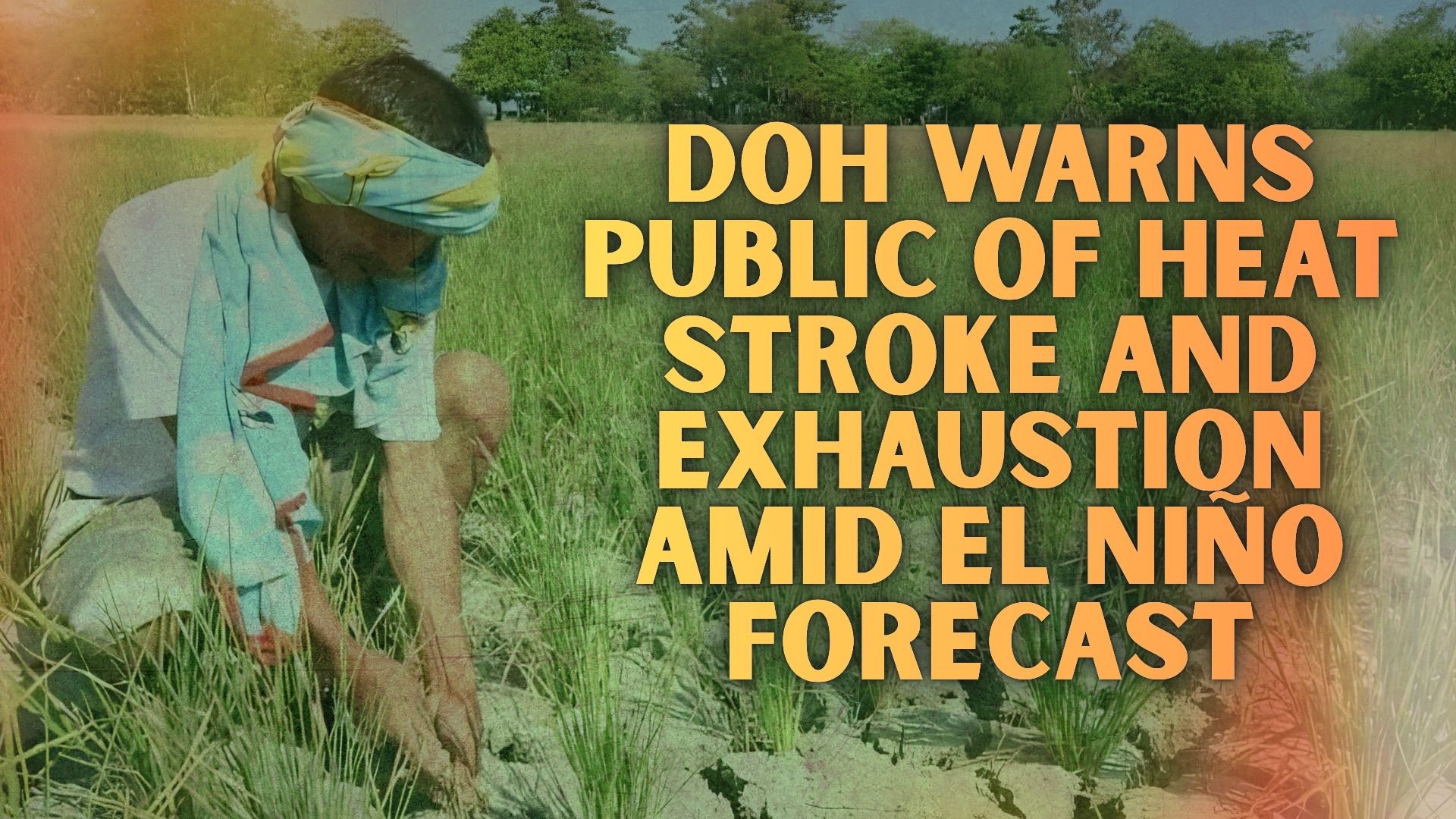
THE Philippine Atmospheric, Geophysical and Astronomical Services Administration (PAGASA) warned that El Niño may intensify in the coming months and persist into 2027, raising concerns about extreme heat and its effects on public health.
Climate Change Commissioner Albert Dela Cruz noted that sea surface temperatures could increase by 1.5 degrees Celsius during Super El Niño. “Ito po ‘yung pinaka-bad at ito ‘yung pinakamatindi sa tala ng history” he said.
The Department of Health (DOH) explains that El Niño occurs when parts of the Pacific Ocean become warmer than normal, often resulting in higher temperatures and below-normal rainfall. These conditions can increase the risk of heat-related illnesses and affect water and food supplies.
DOST Secretary Renato U. Solidum Jr. urged local government units and other sectors to use climate information to prepare for the possible effects of El Niño.
Trigger for a Chain of Health Risks
Extreme temperatures and dry weather increase the risk of heat-related illnesses, including heat stroke and heat exhaustion, as well as dehydration and skin problems. Outdoor workers and people living in crowded conditions are among those who may face greater risks.
The Climate Impact Lab, associated with the University of Chicago, projects that El Niño could contribute to an increase in heat-related deaths in the Philippines from September 2026 to February 2027.
Previous El Niño events, including those in 2015–2016 and 2023–2024, brought periods of elevated temperatures and dry conditions. However, any claim linking these events to increases in heat stroke, cardiovascular problems or dehydration should be supported by specific health data.
Government agencies have implemented measures to address El Niño’s potential effects, including public information campaigns on heat-related illnesses, hospital preparedness measures, local heat emergency guidelines and class suspensions during periods of dangerous heat.
The DOH identifies extreme fatigue or body weakness, dizziness, cramps, nausea and excessive sweating as symptoms of heat exhaustion. To prevent heat-related illnesses, the department advises the public to wear light-colored or lightweight clothing, stay hydrated, and limit excessive physical activity, especially in the afternoon when the heat is scorching hot.
“Kung may makikitang palatandaan ng heat stroke, tumawag agad sa National Emergency Hotline 911 o dalhin sa pinakamalapit na health facility sa iyong lugar,” DOH said.
Nutritional and Food Security Pressures
The World Health Organization (WHO) identifies El Niño as a climate phenomenon that can affect public health by altering temperature and rainfall patterns, potentially disrupting access to food, water, and health care.
Droughts caused by below-normal rainfall can affect agricultural production, as unmilled rice (palay) and corn require consistent soil moisture to grow. The Philippine Statistics Authority (PSA) estimates that palay production will fall to 3.10 million tons between July and September, a 17.2 percent drop from last year's 2.75 million metric tons in the same period. Meanwhile, corn production may fall by 14.2 percent to 2.08 million tons in the third quarter rather than the 2.43 million metric tons that were actually recorded. This supply contraction is projected to drive up retail commodity prices.
In response, the Department of Agriculture (DA) Assistant Secretary Arnel de Mesa stated the agency expects rice imports to exceed 5 million metric tons to maintain buffer stocks and “prevent supply shortages and sudden increases in retail rice prices”.
Furthermore, the National Food Authority (NFA) plans to procure up to 500,000 metric tons of local palay to secure domestic reserves, while the DA expands corn import quotas to protect livestock raisers from rising feed costs.
Water shortages can damage crops, reduce farmers’ income and increase the risk of malnutrition, particularly among children and pregnant and breastfeeding women.
Lower crop yields and water shortages can affect consumers through higher food prices, water supply interruptions and increased household expenses.
According to the DA, farm output is expected to slow down in the second half of the year, with the peak of El Niño now anticipated around Jan. 2027 rather than November.