By Bianca Ysabel M. Lapid | November 2, 2026

By Bianca Ysabel M. Lapid | November 2, 2026
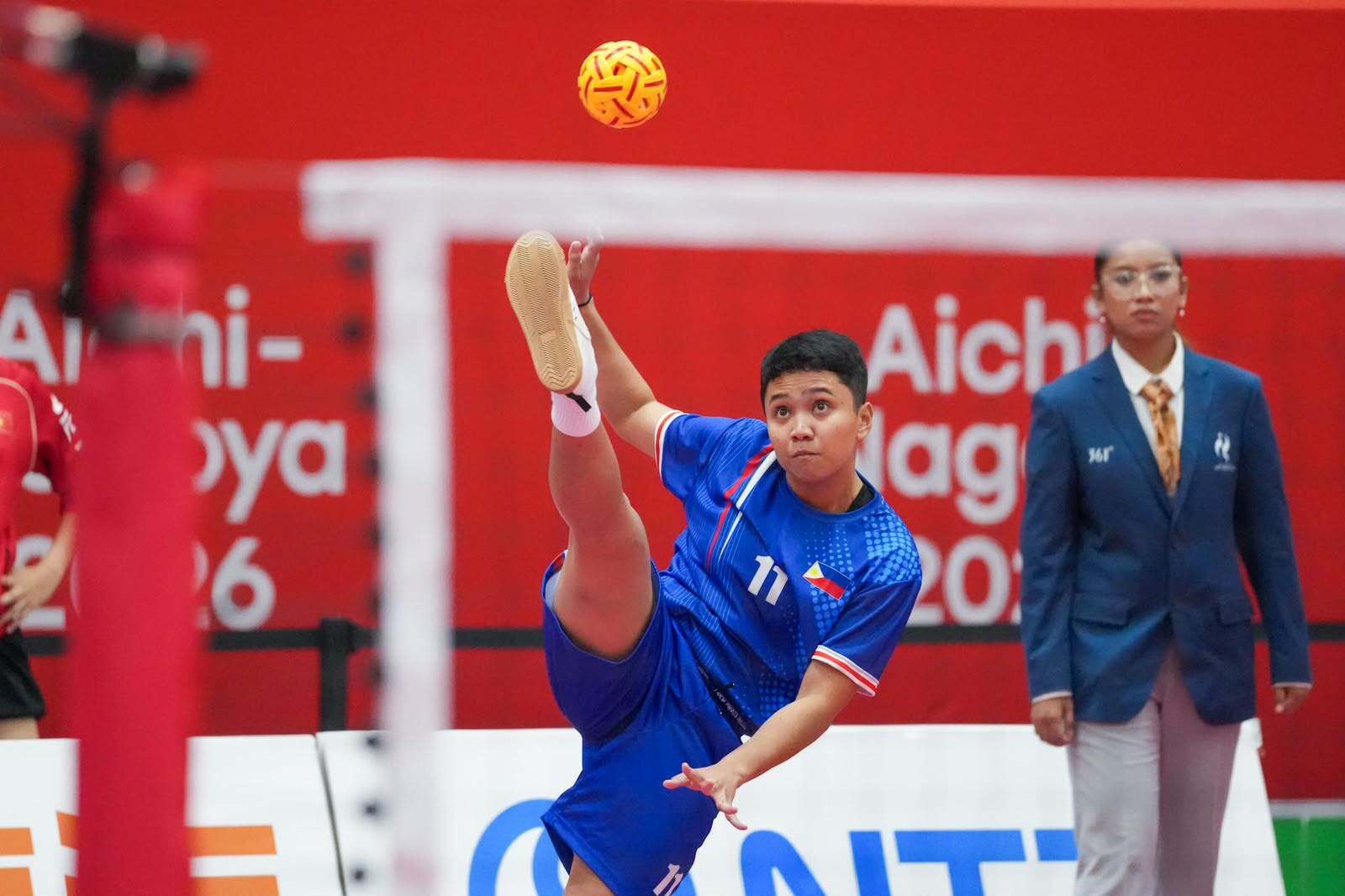
WITH every kick, leap, and strike, athletes use their feet, knees, chest, and head to keep the ball in play. Combining elements of football, volleyball, and acrobatic movement, sepak takraw is a sport rooted in Southeast Asia's centuries-old ball-kicking traditions. Its earliest forms include sepak raga, a traditional game in which players stood in a circle and kept a woven ball airborne without letting it touch the ground. In the Philippines, the sport shares similarities with sipa, a traditional kicking game that has long been part of the country's sporting culture.
Although the exact date the modern version was introduced to the Philippines remains unclear, the establishment of the Philippine National Sepak Takraw Association in 1984 marked a significant milestone in organizing and developing the sport locally.
Despite its limited mainstream following in the Philippines, sepak takraw continues to produce athletes capable of competing against some of the sport's strongest teams in regional and international tournaments.
At the 39th King’s Cup Sepak Takraw World Championships in Thailand in August 2026, the Philippine teams earned silver and bronze medals, carrying that momentum into the 20th Asian Games in Aichi-Nagoya, Japan, where the women’s doubles team of Jean Marie Sucalit and Abegail Sinogbuhan, with substitute Nelly Jay Salon, won silver, while the men’s regu team secured bronze.
From Tradition to Competition
Before its development into an organized competitive sport, sepak takraw was played in traditional forms such as sepak raga across Southeast Asia. Players formed a circle and used their feet, knees, chest, and head to keep a woven ball airborne. Rather than competing against an opposing team, participants focused on maintaining the exchange, making the game a communal activity that brought people together.
In 1960, representatives from several Southeast Asian countries established standardized rules and adopted the name sepak takraw, combining the Malay word sepak, meaning “to kick,” and the Thai word takraw, referring to the ball. The modern game is played on a court divided by a net, with two teams of three players, known as a regu, competing to score points. Players cannot use their hands or arms, and each team may make up to three contacts before returning the ball over the net.
Despite its international presence, sepak takraw remains less visible in mainstream Philippine sports than basketball and volleyball. The sport is played in grassroots competitions such as Palarong Pambansa and Batang Pinoy, while the national association oversees around 70 clubs nationwide.
However, it remains absent from major collegiate leagues such as the University Athletic Association of the Philippines (UAAP), according to association president Karen Caballero. The country is also set to host the Under-19 Asian Sepak Takraw Championship in Manila from Nov. 26 to 30, 2026, providing another opportunity to expose younger athletes and local audiences to the sport
Silver and Bronze on the Asian Stage
The Philippine sepak takraw teams delivered two podium finishes at the 20th Asian Games in Aichi-Nagoya, Japan, in Sept. 2026, with the women's doubles squad claiming silver and the men's regu team taking bronze.
The women's doubles team, composed of Abegail Sinogbuhan and Jean Marie Sucalit, with Nelly Jay Salon as substitute, advanced to the gold-medal match after defeating Laos in the semifinals. They eventually settled for silver after losing to Vietnam, 8–15, 4–15, in the final.
Sinogbuhan served as the feeder, setting up attacking plays for Sucalit, the striker. Their coordination proved crucial throughout the tournament, culminating in a historic silver-medal finish. In a post-match interview, Sinogbuhan admitted that the team did not expect to reach the finals, while Sucalit reflected on the struggles of previous competitions, saying their past disappointments made the medal even more meaningful.
The Philippine men's regu team also secured bronze, with Jason Huerte, Jom Lerry Rafael, Reynaldo Asilum Jr., Glindel Phori, and Ronsited Gabayeron representing the country. The result matched the Philippines' bronze-medal finish in the same event at the 2022 Asian Games in Hangzhou, China, held in Sept. 2023
The performance of both teams together indicated that Filipino athletes have the ability to go head-to-head with sepak takraw nations even in this little-known sport.
A Future Beyond the Pages
The medals are important, yet their legacy will depend on what happens next. Increased media coverage, school competitions, affordable training programs, and greater athlete encouragement could ensure that sepak takraw gets introduced to a new generation of Filipinos.
The government has taken steps to develop Philippine sports through the Philippine Sports Commission’s (PSC) grassroots programs and plans for new training facilities, including a center in Ilocos Norte that will accommodate sepak takraw. However, concerns over the proposed 2027 national budget have raised questions about the continuity of funding for athlete assistance and sports development. For a sport that still needs greater public recognition and more training opportunities, consistent investment will be crucial to nurturing talent beyond international competitions.
The Philippines has a longstanding connection to the sport through traditions such as sipa and its participation in international sepak takraw competitions. Yet, medals alone cannot guarantee the sport’s future. Schools, sports organizations, communities, and government agencies must work together to make training more accessible, provide athletes with adequate facilities, and bring competitions to wider audiences.
Sepak takraw deserves recognition beyond physical education textbooks and international medal tallies. The achievements of Filipino athletes provide an opportunity to introduce the sport to more schools, communities, and households. Whether these victories translate into lasting growth will depend on the country's commitment to developing the sport and supporting the athletes who represent it.